AI Food Scanner for Gout: How to Instantly Know If a Meal Is Safe
09 Nov 2026
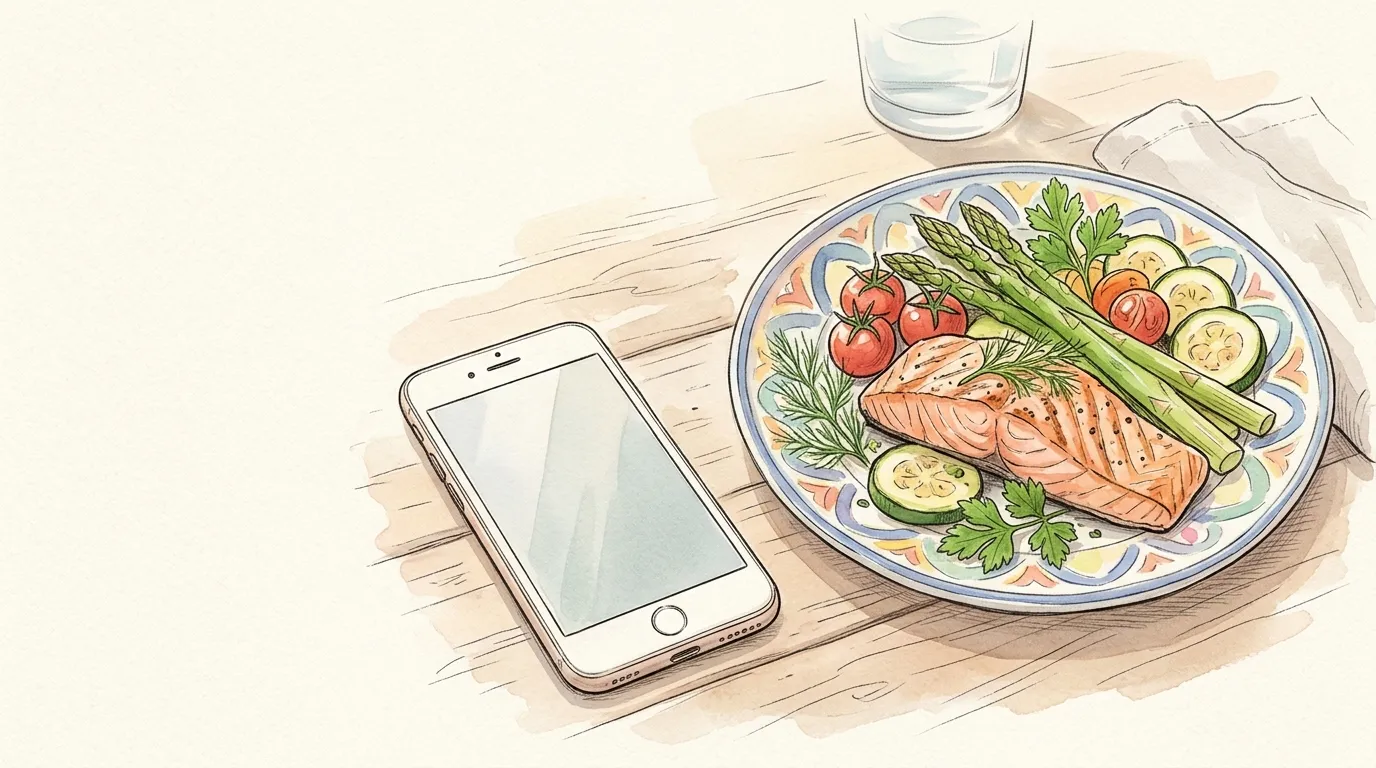
You can know whether a meal will trigger a gout flare in under 10 seconds — no food label required, no nutrition table to decode. AI-powered food scanners have made this possible, transforming what used to be hours of research into an instant answer. But not all scanners are equal, and knowing how to use one correctly makes the difference between reliable protection and false confidence.
Except this isn't science fiction. It's a technology that gout patients are using right now, and understanding how it works — and what its limits are — will help you use it safely.
Why Identifying Purine Content Visually Is So Hard
You've been there: a plate arrives at a restaurant and you genuinely have no idea what's in it. That soup could be made with anchovy paste (140–200 mg purines/100g) or vegetable broth (5–10 mg/100g). That stirred fried dish might use internal organ meat or just chicken breast. The difference between a safe meal and a flare-triggering one is invisible to the naked eye.
The traditional approach — memorizing which foods are high, medium, or low in purines — works at home with familiar ingredients. But in real life, meals are mixed, preparation varies, and portion sizes matter as much as the ingredient itself. A 50g portion of anchovies carries roughly 70–100 mg of purines. That same 50g of chicken breast contains about 65–80 mg. The thresholds the American College of Rheumatology (ACR) recommends staying under — typically 400 mg/day for most gout patients — can be crossed unknowingly at a single restaurant meal.
Bottom line: visual identification of purine content is unreliable without data, and manual lookup is slow. AI food scanning solves both problems at once.
How AI Food Scanning Works: The Technology Behind the Scan
An AI food scanner uses computer vision — the same class of technology that lets your phone recognize faces — to identify the foods in a photo. Here's what happens between the moment you snap a picture and the moment you see a purine rating:
1. Image recognition A trained neural network analyzes the image and identifies individual food components: proteins, vegetables, starches, sauces, and garnishes. It has been trained on thousands of food photos and can distinguish, for example, between salmon and trout, or between bean curd and egg white — foods that look similar but have very different purine profiles.
2. Database lookup Each identified food is matched to a nutritional database. The best gout-focused scanners use purine databases built specifically for gout management, pulling from sources like the USDA National Nutrient Database and peer-reviewed purine content studies published in journals such as Nutrition & Metabolism.
3. Portion estimation Using depth cues and reference objects in the image (a fork, a plate edge, a glass), the scanner estimates portion sizes — typically accurate within 15–25% for standard servings. This matters because purines are measured per 100g of food, and a 100g portion of sardines (480 mg purines) is very different from a 30g garnish of the same fish.
4. Total purine calculation All identified foods, matched to estimated portions, are summed to give a total purine load for the meal. The result is displayed as a risk level (safe / moderate / high) and often as a specific milligram estimate.
5. Personalized advice The most capable scanners layer in your personal profile: your uric acid history, current medications, daily intake so far, and food preferences. A meal that's moderate-risk for a patient with uric acid at 5.5 mg/dL might be high-risk for someone whose level is 7.8 mg/dL.
What the Research Says About Food Recognition Accuracy
A 2022 study published in Nutrients found that AI-based food recognition systems achieved ingredient-level accuracy of 70–85% across diverse meal types when tested on restaurant-plated dishes. Homemade meals with clearly separated components scored higher — 85–92% — while stew-style dishes or heavily sauced plates scored lower.
This means AI scanners are excellent at flagging obvious high-purine items (visible organ meats, shellfish, anchovies, red meat), and reasonable at identifying moderate-purine proteins (chicken, pork, fish fillets). They are less reliable for:
- Blended or pureed foods (soups, gravies, dips) where individual ingredients are indistinguishable
- Hidden additives (anchovy paste in dressings, fish sauce in Asian dishes, yeast extract in processed foods)
- Very small garnishes that contribute a disproportionate purine load (a few anchovies over a Caesar salad)
For gout management, this matters because hidden high-purine ingredients in otherwise safe-looking dishes are one of the most common causes of unexpected flares. A good scanner will flag "sauce — ingredients unclear" and prompt you to ask the restaurant staff, which is the right response.
Using an AI Food Scanner: A Step-by-Step Guide
Before you eat out
- Open your gout management app and navigate to the AI Food Scanner.
- When your meal arrives, hold your phone 30–40cm above the plate for a clear overhead view.
- Make sure the entire plate is in frame; partial shots reduce accuracy significantly.
- Tap to scan and wait for the analysis (typically 3–8 seconds on a standard connection).
- Review the identified items. If something looks wrong (the scanner listed "chicken" but it's clearly pork), use the correction feature to update it.
- Check the total purine load and the risk rating before you eat.
At home with unfamiliar ingredients
- Scan the raw ingredients before cooking to get baseline purine data.
- Scan the finished dish to get a combined estimate accounting for portion size.
- Use the scan history to track patterns — which dishes consistently come in safe, which unexpectedly spike.
At a buffet or food court Take individual photos of each dish you're considering, not a single photo of a full plate. This gives the scanner cleaner data for each item and more accurate portion control.
The GoutSnap app includes an AI Food Scanner that works exactly this way — you photograph your meal and get an instant purine estimate with a safe/moderate/high flag, backed by a curated purine database drawn from USDA and peer-reviewed food science sources. This is especially useful for [link: gout-friendly Asian foods restaurant guide] where hidden high-purine ingredients in sauces and broths are common.
Foods the Scanner Handles Best (and Worst)
| Category | Scanner Accuracy | Notes |
|---|---|---|
| Whole proteins (fish fillet, chicken breast, steak) | High | Clear shape and texture; well-represented in training data |
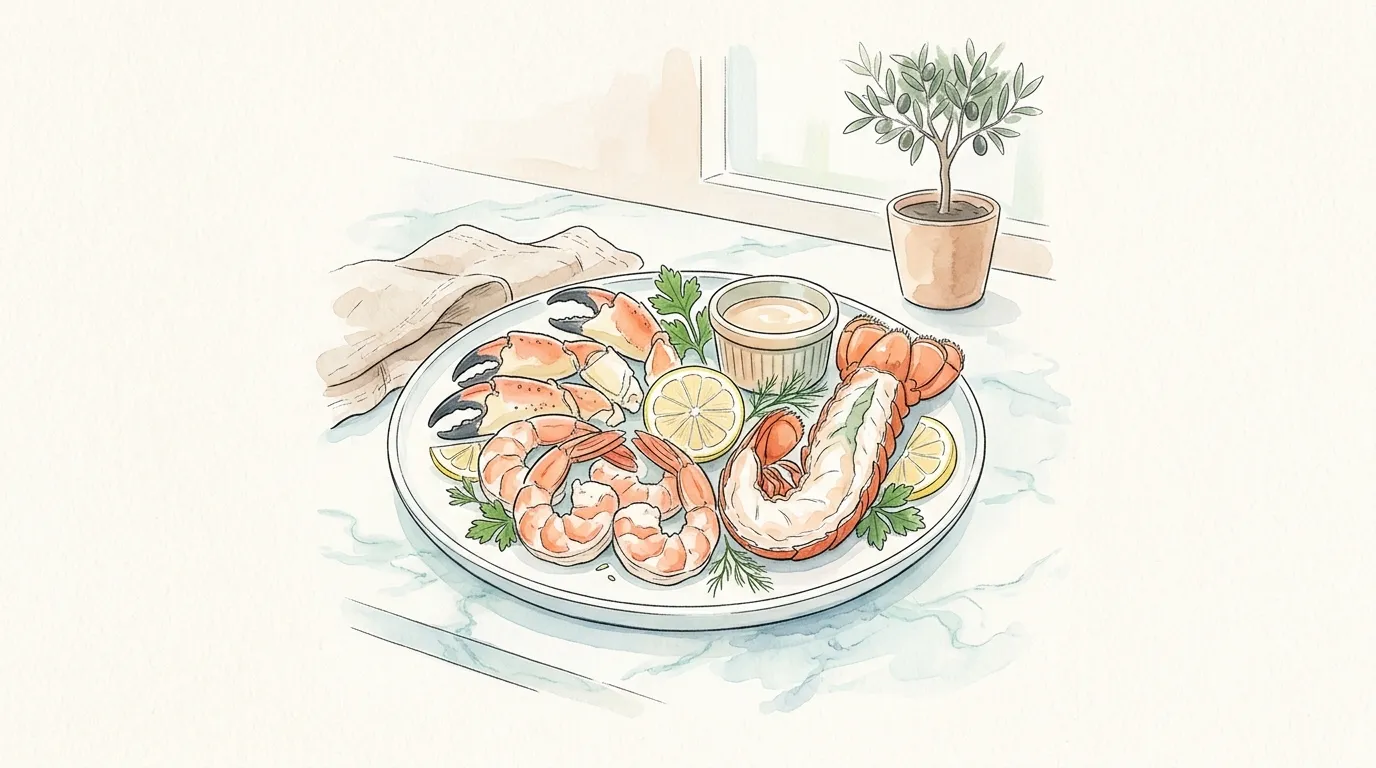
| Shellfish (shrimp, crab, lobster) | High | Distinctive visual features |
| Vegetables | High | Most vegetables are low-purine; identification errors matter less |
| Processed meats | Moderate | Sausage vs. salami vs. hot dog may look similar |
| Soups and stews | Moderate–Low | Broth composition invisible; protein chunks identified, base is not |
| Mixed dishes (fried rice, pasta, casseroles) | Moderate | Individual components hard to separate |
| Sauces and dressings | Low | Ingredients completely invisible; always prompt the user to verify |
| Hidden additives (fish paste, yeast extract) | Very Low | Cannot scan what cannot be seen |
For the high-risk categories, the scanner's value isn't perfect identification — it's flagging uncertainty so you know to ask a question before eating rather than finding out through a flare two days later.
The 400 mg Daily Purine Budget: What Scanning Makes Possible
The ACR's dietary guidance doesn't prescribe a hard daily maximum for purines, but most rheumatologists and dietitians working with gout patients use 400 mg/day as a practical ceiling — roughly half the intake seen in Western diets that correlate with elevated uric acid.
Before AI scanning, estimating daily purine intake required manual food logging and lookup for every ingredient. For a person eating three meals and two snacks, this could mean 15–20 separate database searches per day. The friction alone caused most patients to give up within a week.
Scanning collapses that friction: you photograph rather than type, you get immediate feedback rather than delayed calculations, and you see your running daily total update in real time. A 2023 patient adherence study in JMIR mHealth and uHealth found that food tracking adherence rose from 23% at 30 days to 61% at 30 days when tracking used photo-based input versus manual text entry. The act of scanning becomes a habit far more quickly than typing into a food log.
Bottom line: tracking your purine budget stops being a chore and starts being a reflex.
Scanning vs. Purine Tables: Why You Still Need Both
AI scanning doesn't replace your knowledge of [link: complete gout diet guide foods rated purine level] — it complements it. Here's why:
Scanning is fast; tables are precise. A scan gives you a risk flag in seconds; a table gives you the exact mg/100g for a specific preparation of a specific food. When you're deciding whether to eat a food, the scan is the answer. When you're planning a meal to hit a specific purine target, the table is the tool.
Scanning works on mixed dishes; tables work on single ingredients. Most real meals are combinations. The scanner handles that combination in one step. Tables require you to break a dish into components first.
Scanning may miss hidden ingredients; your knowledge catches them. Once you know that fish sauce (Southeast Asian cuisine), Worcestershire sauce (British cooking), and bouillon cubes (virtually every cuisine) are high in purines, you mentally add that caveat to the scanner's output for dishes that typically use them. The scanner and your knowledge work together.
Tables are your backup when scanning fails. Network unavailable, bad lighting, or a dish the scanner doesn't recognize — these are the moments when knowing that anchovies, organ meats, and certain game meats are always off-limits keeps you safe.
3 Mistakes Gout Patients Make With Food Scanning
Mistake 1: Trusting a low rating without checking the sauce. A scanner might correctly identify your pasta as low-purine and miss the anchovy-based sauce underneath it. If a dish has a sauce with unknown ingredients, treat the scan as incomplete and ask.
Mistake 2: Scanning only unfamiliar meals. Flares often come from familiar foods eaten in larger-than-usual portions. Regular scanning of your everyday meals catches portion creep — the slow increase in serving size that gradually tips your daily intake over threshold.
Mistake 3: Ignoring cumulative intake. A single scan showing "moderate" is only meaningful in context. If you've already eaten 300 mg of purines earlier in the day, a "moderate" meal of 150 mg puts you at 450 mg total — over the daily ceiling. Use the daily total feature, not just per-meal ratings.
Understanding the Limits: What No Scanner Can Do
An AI food scanner cannot tell you whether a food will trigger YOUR next flare. Flare risk is individual — the same meal that's fine for someone with uric acid at 4.0 mg/dL and kidneys that excrete uric acid efficiently might trigger a flare in someone whose kidneys under-excrete it. The scanner gives you population-level data about purine content; your rheumatologist's guidance gives you individual thresholds.
It also can't account for the metabolic effects of alcohol on uric acid excretion (which is why a moderate-purine meal with two beers carries far more risk than the same meal without alcohol), the dehydration effects that concentrate uric acid in joints, or the inflammatory state from a recent illness that might lower your personal flare threshold temporarily.
Use scanning as a tool for information, not as a guarantee. It's one layer of protection in a multi-layer approach: dietary management, hydration, medication adherence, and regular monitoring together define your risk.
In Summary
- AI food scanners use computer vision and purine databases to analyze a smartphone photo of your meal and return an instant risk rating.
- Accuracy is highest for whole proteins, shellfish, and vegetables; lowest for sauces, soups, and hidden additives.
- Scanning raises dietary tracking adherence dramatically by reducing friction: you photograph rather than manually log.
- Use a 400 mg/day purine budget as a practical target; scanning makes tracking that budget feasible in real life.
- Scanning complements purine table knowledge — use tables for planning, scanning for real-time decisions.
- The three most common mistakes: trusting a low rating when sauces are present, scanning only unfamiliar foods, and ignoring cumulative daily intake.
- No scanner replaces your rheumatologist's personalized guidance, medication plan, or hydration habits — it's one important tool in a complete gout management strategy.
Take Control of Your Uric Acid with a Smarter Gout App
High uric acid is the root cause of gout attacks — and managing it starts with what you eat. GoutSnap is a dedicated gout app that uses AI to analyze your meals in real time, so you always know which foods are raising your uric acid and which are safe.
Snap a photo of your meal and our gout app instantly estimates purine content, flags high-purine foods linked to uric acid spikes, and suggests lower-purine alternatives — no guesswork needed.
Why GoutSnap is the #1 Gout App for Uric Acid Management
- AI Food Scanner - Photo-based purine analysis helps you avoid uric acid-raising foods before they cause a flare
- Uric Acid Diet Tracker - Log meals and monitor daily purine intake to keep uric acid levels in a safe range
- Personalized Advice - The gout app learns your diet patterns and recommends uric acid-friendly swaps tailored to you
- Flare & Trigger Tracking - Connect meals to gout symptoms over time to discover which foods drive your uric acid up
Unlike generic diet apps, GoutSnap is built exclusively for gout — every feature is designed to help you lower uric acid and prevent painful flare-ups.


4.9 on the App Store · 15,000+ downloads · 475+ reviews