Tuna and Gout: Canned vs Fresh — Which Is Safer?
28 Oct 2026
Canned tuna is significantly safer for gout than fresh — containing roughly 40% fewer purines per serving — but neither form gets a free pass. The difference matters when you're trying to manage uric acid without cutting fish out entirely.
Except here's the nuance most gout guides skip: the omega-3 fatty acids in tuna may actually help reduce inflammation that drives gout flares, according to research published in Arthritis & Rheumatology. So the question isn't simply "yes or no" — it's about form, frequency, and portion size.
Why Tuna Is a Double-Edged Sword for Gout
Tuna is high in purines — the compounds your body breaks down into uric acid. Elevated uric acid (above 6.8 mg/dL in the bloodstream) leads to urate crystal deposits in your joints, causing the excruciating pain of a gout attack.
At the same time, tuna is rich in omega-3 fatty acids (EPA and DHA), which have documented anti-inflammatory effects. A 2012 study in Arthritis & Rheumatology found that higher marine omega-3 intake was associated with lower systemic inflammation. Some researchers theorize this anti-inflammatory benefit may partially offset the purine load — though this remains an area of active research, not a clinical recommendation to eat more tuna.
The bottom line: tuna offers real nutritional value, but its purine content is high enough that portion control and preparation method genuinely matter.
The Purine Numbers: Canned vs Fresh Tuna
Here's where canned tuna earns its better reputation. When tuna is canned, it's cooked in the can and then packed in either water or oil. The cooking and canning process causes a significant portion of purines to leach into the liquid — purines that you discard when you drain the can.
Fresh tuna, especially darker-fleshed cuts like bluefin, carries the full purine load intact.
| Tuna Type | Purines (mg/100g) | Gout Risk Level |
|---|---|---|
| Canned light tuna, in water (drained) | ~116–142 mg | Moderate-High |
| Canned albacore tuna, in water (drained) | ~140–160 mg | Moderate-High |
| Canned tuna, in oil (drained) | ~130–155 mg | Moderate-High |
| Fresh yellowfin tuna | ~197–230 mg | High |
| Fresh bluefin tuna | ~230–257 mg | Very High |
| Fresh skipjack tuna | ~197–210 mg | High |
Sources: USDA FoodData Central; Japanese Standards Tables of Food Composition (standard reference for seafood purines)
A standard 3-ounce (85g) serving of drained canned light tuna provides roughly 99–121 mg of purines — below the 150 mg/serving threshold that many rheumatologists use as a rough high-purine cutoff. A similar serving of fresh bluefin tuna can deliver 195+ mg of purines in one sitting.
For context, the American College of Rheumatology (ACR) 2020 Gout Management Guidelines classify organ meats and alcohol as the highest-risk foods, followed by high-purine seafood (which includes fresh tuna). Their guidance: limit high-purine seafood rather than eliminate it entirely for most patients.
Canned Light vs Canned Albacore: Not All Cans Are Equal
Inside the canned category, light tuna and albacore (white tuna) differ in both purine content and mercury levels.
Light tuna (usually skipjack or yellowfin): lower in purines (~116–142 mg/100g drained), and also lower in mercury. This is the safer daily choice for gout patients.
Albacore tuna (white tuna): higher in omega-3s than light tuna, but also higher in purines (~140–160 mg/100g) and mercury. The FDA and EPA recommend limiting albacore to no more than one 6-ounce serving per week for adults, partly due to mercury and partly because of its richer nutrient density.
For gout specifically, canned light tuna in water — thoroughly drained — is the lowest-risk canned option.
How to Eat Canned Tuna Without Triggering a Flare
The preparation and pairing choices you make around tuna matter as much as the tuna itself. Here's how to lower the overall uric acid impact:
1. Always drain and rinse your canned tuna. Rinsing under cold water removes additional purines that cling to the fish after draining. One study found rinsing can reduce soluble purines by up to 20–30% beyond simple draining.
2. Choose water-packed over oil-packed. Oil-packed tuna tends to have slightly higher purine retention because the oil seals the fish more tightly. Water-packed tuna loses more purines into the liquid during the canning process.
3. Keep portions to 3 ounces (85g). This is roughly half of a standard 5-oz can. At that portion, you're likely staying under 130 mg of purines — manageable within a day's 400–600 mg total if your other meals are low in purines.
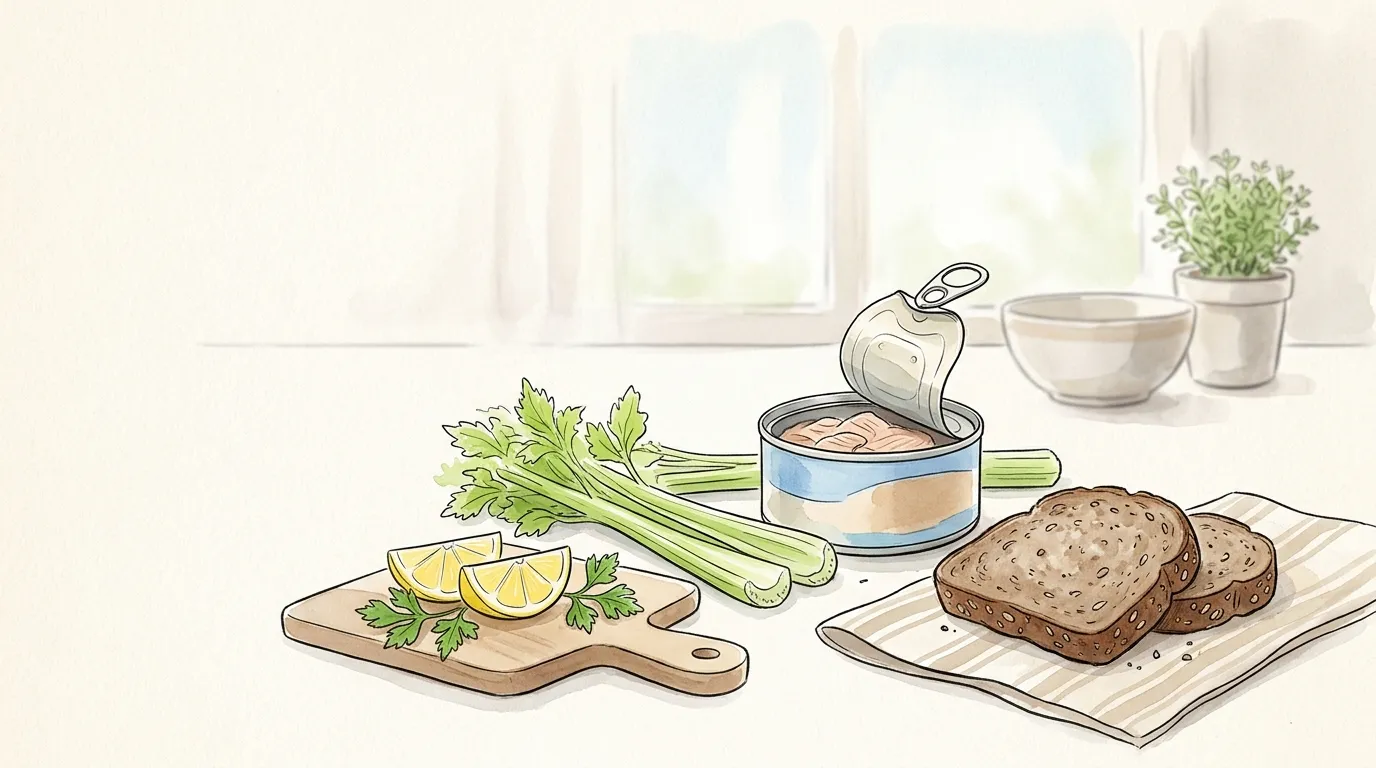
4. Don't combine with other high-purine foods in the same meal. Tuna alongside asparagus, mushrooms, and a beer would stack purines in ways that could trigger a spike. Pair it with low-purine options: romaine lettuce, cucumber, celery, whole grain bread, or low-fat cheese.
5. Stay well hydrated. Water helps your kidneys flush uric acid. Aim for at least 8 cups (2 liters) per day, more if you're active. Drink a glass of water before and after your tuna meal.
6. Limit to 2–3 times per week maximum. Even at moderate purine levels, daily tuna intake adds up. Two to three servings per week of canned light tuna fits within a gout-conscious diet for most people — but your individual tolerance will vary based on your uric acid levels and medication status.
What About Sushi and Sashimi?
Sushi and sashimi present the worst-case scenario for gout: raw, fresh, high-purine tuna without the mitigation benefits of cooking and canning. A typical sashimi order of 6 pieces uses about 90–120g of fish — and at fresh tuna's purine density, that's 177–257 mg of purines in one sitting.
On top of the fish itself, soy sauce contributes sodium (which can promote uric acid retention), and if you're drinking sake or beer with your meal, you're stacking three gout risk factors simultaneously.
This doesn't mean sushi is off the table forever. But if you're managing active gout or have elevated uric acid, sushi nights should be rare (once a month or less) and strategic — [link: low-purine restaurant guide] has specific ordering tips for eating out safely.
Salmon sashimi is the smartest raw fish choice if you want sashimi, since salmon's purine content (~170 mg/100g) falls below bluefin tuna's. [link: salmon and gout guide] covers that comparison in detail.
Tuna and Uric Acid: What the Research Actually Shows
The relationship between fish consumption and gout risk has been studied in several large cohort studies:
A landmark study in The New England Journal of Medicine (Choi et al., 2004, n=47,150 men) found that higher seafood intake was associated with a 51% increased risk of gout compared with the lowest intake quartile — one of the clearest signals that high-purine seafood, including fish, raises gout risk at the population level.
However, a nuance in that data: fish consumption showed a more modest effect than organ meats and was not uniformly high across all seafood types. The researchers noted that the association was strongest for high-purine shellfish and fresh fatty fish.
More recent research has explored whether omega-3 supplementation (without the purine load) might reduce gout flare frequency. Early results are promising but inconclusive — this is not yet an ACR-endorsed treatment. Do not substitute tuna for an omega-3 supplement if your goal is anti-inflammatory support; the purine trade-off isn't worth it at therapeutic doses.
How Tuna Compares to Other Protein Sources
If you're weighing tuna against other proteins in your weekly rotation, here's the broader picture:
| Protein Source | Purines (mg/100g) | Notes |
|---|---|---|
| Canned light tuna, drained | ~116–142 | Moderate-high; safer with rinsing |
| Salmon, cooked | ~170 | Moderate-high; rich in omega-3s |
| Chicken breast, cooked | ~150–175 | Moderate; often better tolerated |
| Lean beef | ~110–133 | Moderate |
| Eggs | ~1–2 | Very low; excellent low-purine protein |
| Tofu (firm) | ~68 | Low; good plant protein alternative |
| Legumes (lentils, cooked) | ~127 | Moderate; evidence suggests they don't raise gout risk like meat |
Notice that canned tuna sits in the same broad tier as salmon and chicken. All three are "moderate-high" proteins you can include in reasonable portions. What separates tuna from chicken is variability — fresh tuna can spike well above fresh chicken in purines. Stick to the canned version and you're on comparable footing.
Plant proteins (eggs, tofu, legumes) remain the most gout-friendly protein sources and deserve space in your weekly rotation alongside modest portions of fish.
The Verdict: Canned vs Fresh
| Factor | Canned Tuna (Light, in Water) | Fresh Tuna |
|---|---|---|
| Purines per 3 oz | ~99–121 mg | ~168–219 mg |
| Preparation mitigation | Drain + rinse to reduce further | Cooking reduces some; raw has the most |
| Gout risk | Moderate | High to Very High |
| Recommended frequency | Up to 2–3x/week | 1x/week max; avoid raw |
| Mercury concern | Low (light) | Moderate-High (bluefin, albacore) |
Canned light tuna in water, drained and rinsed, eaten in 3-ounce portions a few times a week, is a reasonable choice for most gout patients. Fresh tuna — especially raw, especially bluefin — should be treated as an occasional indulgence rather than a regular meal.
If you're unsure how a specific tuna dish fits your daily purine budget, GoutSnap's AI Food Scanner lets you photograph your meal and get an immediate purine estimate — useful when navigating restaurant menus or new recipes.
In Summary
- Canned light tuna contains roughly 40% fewer purines than fresh tuna, making it the safer choice for gout.
- Drain and rinse canned tuna before eating to reduce purines further.
- 3 ounces, 2–3 times per week is a reasonable upper limit for most gout patients on canned light tuna.
- Fresh tuna — especially bluefin and raw sashimi — carries 197–257 mg purines per 100g and should be eaten rarely.
- Canned albacore has higher purines and mercury than canned light tuna; choose light when possible.
- Always pair tuna meals with low-purine sides and extra water to support kidney clearance.
- The omega-3 benefit in tuna is real but doesn't cancel out the purine load — moderation, not elimination, is the strategy.
- Soy sauce, sake, and beer compound the risk of a sushi meal — if you're eating tuna out, keep portions small and skip the alcohol.
Take Control of Your Uric Acid with a Smarter Gout App
High uric acid is the root cause of gout attacks — and managing it starts with what you eat. GoutSnap is a dedicated gout app that uses AI to analyze your meals in real time, so you always know which foods are raising your uric acid and which are safe.
Snap a photo of your meal and our gout app instantly estimates purine content, flags high-purine foods linked to uric acid spikes, and suggests lower-purine alternatives — no guesswork needed.
Why GoutSnap is the #1 Gout App for Uric Acid Management
- AI Food Scanner - Photo-based purine analysis helps you avoid uric acid-raising foods before they cause a flare
- Uric Acid Diet Tracker - Log meals and monitor daily purine intake to keep uric acid levels in a safe range
- Personalized Advice - The gout app learns your diet patterns and recommends uric acid-friendly swaps tailored to you
- Flare & Trigger Tracking - Connect meals to gout symptoms over time to discover which foods drive your uric acid up
Unlike generic diet apps, GoutSnap is built exclusively for gout — every feature is designed to help you lower uric acid and prevent painful flare-ups.


4.9 on the App Store · 15,000+ downloads · 475+ reviews