Gout-Friendly Breakfast Ideas: 15 Easy Recipes Under 150mg Purine
04 Nov 2026
The safest breakfasts for gout are built around eggs, low-fat dairy, whole grains, and fresh fruit — foods that contain fewer than 50mg of purines per serving. Starting your day with the right foods isn't just about avoiding a flare; it's one of the most practical ways to keep uric acid levels stable throughout the day.
Here's what most people get wrong: they eliminate eggs out of fear, while continuing to eat processed meats like bacon and sausage. The science points in a different direction. Dietary protein from eggs and dairy does not raise uric acid the way organ meats and red meat do — and some breakfast foods, particularly low-fat dairy and cherries, may actually help lower it.
Why Breakfast Is Critical for Uric Acid Control
Your uric acid level isn't static. It fluctuates throughout the day based on what you eat, how much you drink, and even how well you slept. Research published in Arthritis & Rheumatism found that uric acid levels tend to peak in the early morning hours — the same reason gout attacks so often strike at night or just before dawn.
Breakfast is your first opportunity to either amplify that morning spike or blunt it. A meal high in purines — think bacon, sausage links, or canned sardines — can push uric acid higher. A meal built on low-purine foods with plenty of hydration gives your kidneys a head start clearing urate before the day gets busy.
Skipping breakfast entirely isn't the answer either. Prolonged fasting can temporarily raise uric acid by increasing the breakdown of purines already in your body. If you're managing gout with diet, eating a consistent, balanced breakfast is part of the strategy.
Bottom line: a smart breakfast doesn't guarantee a flare-free day, but a bad one stacks the odds against you.
The Breakfast Foods That Raise Uric Acid (Avoid These)
Not all breakfast foods carry the same purine load. These are the main offenders:
- Processed meats: Bacon (100–130mg purines per 100g), pork sausage (up to 150mg/100g), and deli ham (80–100mg/100g). A single serving of two bacon strips can contribute 40–50mg purines before you've added anything else.
- Organ meats: Liverwurst, liver pâté, or any offal spread can exceed 300mg/100g in purines.
- Anchovies and sardines: Popular in some European-style breakfasts, sardines contain 345mg purines per 100g according to USDA food composition data.
- High-fructose foods: Sweetened fruit juices and sugar-laden cereals don't add purines directly, but fructose stimulates uric acid production in the liver. The American College of Rheumatology (ACR) specifically recommends avoiding fructose-sweetened beverages and foods.
- Beer: Even one beer at breakfast in certain cultural contexts significantly elevates uric acid. No amount of beer is safe with gout.
The Breakfast Foods That Lower or Protect Against Uric Acid
Certain breakfast staples work actively in your favor:
Low-fat dairy: This is one of the most consistent findings in gout research. A landmark study in the New England Journal of Medicine (Choi et al., 2004) found that men who consumed 2 or more daily servings of low-fat dairy had a 48% lower risk of gout compared to those who consumed less than one serving per month. The dairy proteins casein and lactalbumin appear to promote uric acid excretion by the kidneys.
Coffee: Regular coffee consumption is associated with lower serum uric acid in multiple large studies. The NIH-funded NHANES analysis found that men who drank 4–5 cups of coffee daily had significantly lower uric acid levels than non-drinkers. Even 1–2 cups per day shows a modest effect. The mechanism likely involves chlorogenic acid inhibiting xanthine oxidase — the enzyme that produces uric acid — not caffeine itself.
Cherries and tart cherry products: Cherries contain anthocyanins that inhibit xanthine oxidase and reduce inflammation. A 2012 study in Arthritis & Rheumatism found that cherry intake was associated with a 35% lower risk of gout attacks over a 2-day monitoring period.
Vitamin C-rich fruits: Citrus fruits, strawberries, and kiwi all contain Vitamin C, which the NIH has shown increases renal uric acid clearance. Even modest Vitamin C intake from whole fruit contributes meaningfully to urate control.
Eggs: Eggs are remarkably low in purines — roughly 2–4mg per large egg — making them one of the safest protein sources for gout patients. Two eggs for breakfast adds fewer than 10mg purines total.
Purine Content of Common Breakfast Ingredients
| Food | Serving Size | Estimated Purines | Verdict |
|---|---|---|---|
| Egg (large) | 1 egg (50g) | 2–4mg | ✅ Safe |
| Oatmeal (dry) | ½ cup (40g) | ~20mg | ✅ Safe |
| Whole wheat bread | 1 slice (30g) | 4–5mg | ✅ Safe |
| Greek yogurt (plain) | ½ cup (120g) | 10–15mg | ✅ Safe |
| Low-fat milk | 1 cup (240ml) | 10–12mg | ✅ Safe |
| Cottage cheese | ½ cup (110g) | 5–8mg | ✅ Safe |
| Blueberries | 1 cup (148g) | 8–10mg | ✅ Safe |
| Banana | 1 medium (120g) | 5–8mg | ✅ Safe |
| Avocado | ½ fruit (100g) | 15–20mg | ✅ Safe |
| Sweet potato | ½ cup cooked (75g) | 8–10mg | ✅ Safe |
| Almonds | 1 oz (28g) | ~10mg | ✅ Safe |
| Tomatoes | 1 medium (120g) | 10–15mg | ✅ Safe |
| Spinach | ½ cup raw (30g) | ~17mg | ✅ Safe* |
| Bacon (pork) | 2 strips (30g) | 40–50mg | ⚠️ Limit |
| Pork sausage link | 2 links (56g) | 80–100mg | ❌ Avoid |
*Note: Vegetable purines, including those in spinach, do not appear to raise gout risk the same way animal purines do, according to the ACR dietary guidelines.
For a full breakdown of which foods to eat and avoid beyond breakfast, see [link: complete gout diet guide].
15 Gout-Friendly Breakfast Recipes Under 150mg Purine
Each recipe is designed to stay well below the total morning purine threshold while giving you enough protein and energy to start the day. The goal isn't zero purines — it's keeping your intake in a range your kidneys can handle comfortably.
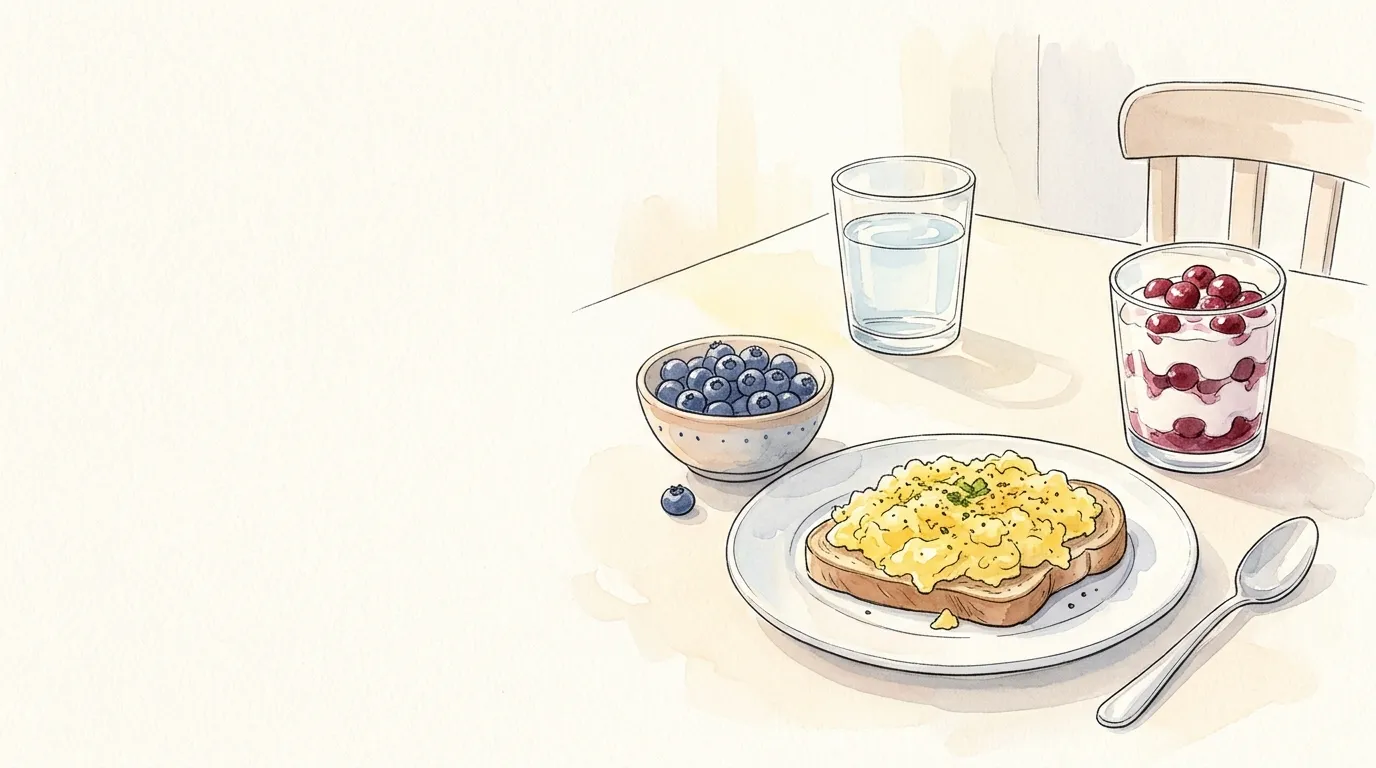
1. Classic Scrambled Eggs with Toast
Estimated purines: ~15–20mg Two scrambled eggs cooked in olive oil, served with 2 slices of whole wheat toast and sliced tomato on the side. High in protein, deeply filling, and extremely low in purines. This is the safest high-protein breakfast for gout patients.
2. Berry Overnight Oats
Estimated purines: ~30–40mg Combine ½ cup rolled oats with ¾ cup low-fat milk. Refrigerate overnight. Top with fresh blueberries and sliced strawberries. The berries add Vitamin C, the dairy provides uricosuric proteins, and the oats give sustained energy.
3. Greek Yogurt Parfait with Tart Cherries
Estimated purines: ~25–30mg Layer ½ cup plain Greek yogurt with fresh or frozen tart cherries and 2 tablespoons of unsweetened granola. Both the dairy and the cherries are scientifically supported as protective for gout — in one bowl.
4. Avocado Toast with Poached Egg
Estimated purines: ~20–25mg Mash ½ ripe avocado on one slice of whole grain toast. Top with one poached egg. Add black pepper and a squeeze of lemon juice. Avocado's healthy fats support anti-inflammatory processes without adding purines.
5. Banana Almond Butter Smoothie
Estimated purines: ~20–25mg Blend 1 banana, 1 cup low-fat milk, 1 tablespoon natural almond butter, and a handful of ice. Quick, portable, and satisfying — all ingredients are well under the safe purine threshold.
6. Veggie Omelette
Estimated purines: ~25–35mg Two eggs, diced tomatoes, bell peppers, and a handful of baby spinach. Cook in a non-stick pan with a teaspoon of olive oil. The vegetables add color and nutrients. Spinach's moderate purine content is offset by the fact that vegetable purines behave differently in the body.
7. Cottage Cheese and Peach Bowl
Estimated purines: ~15–20mg ½ cup low-fat cottage cheese topped with sliced fresh peaches (or canned in juice, not syrup) and a pinch of cinnamon. High protein, virtually no purines. Cottage cheese is one of the best high-protein, low-purine foods you can eat.
8. Tart Cherry Smoothie Bowl
Estimated purines: ~30–35mg Blend 1 cup tart cherry juice, ½ frozen banana, and ½ cup low-fat yogurt until smooth. Pour into a bowl. Top with sliced almonds and fresh blueberries. Research-backed ingredients in one bowl — the cherry-dairy combination is hard to beat for gout.
9. Sweet Potato Hash with Eggs
Estimated purines: ~30–40mg Dice ½ sweet potato and sauté with bell peppers and onion in olive oil until golden. Top with two fried eggs. Skip the sausage. The sweet potato provides satisfying carbohydrates with only about 10mg purines per serving.
10. Whole Grain Pancakes with Strawberry Compote
Estimated purines: ~40–50mg Use a whole grain or oat-based pancake mix. Top with a simple compote of fresh strawberries cooked briefly with a teaspoon of honey. Strawberries add Vitamin C, which helps excrete uric acid. Use sparingly sweetened syrup or skip it entirely.
11. Low-Fat Cheese and Tomato Omelette
Estimated purines: ~20–25mg Beat two eggs with a tablespoon of water. Cook in olive oil. Fill with sliced cherry tomatoes and 1 oz of low-fat cheese (mozzarella or cheddar). Cheese is very low in purines and adds satisfying fat to keep you full until lunch.
12. Cold Brew Coffee Overnight Oats
Estimated purines: ~20–30mg Make overnight oats with ½ cup oats and ¾ cup almond milk. Stir in 2 tablespoons of cold brew coffee. Top with sliced banana and 1 teaspoon of unsweetened cocoa. Coffee's uric-acid-lowering effect is built directly into this recipe.
13. Mixed Berry Yogurt Bowl
Estimated purines: ~15–20mg Mix ½ cup plain low-fat yogurt with a tablespoon of crushed walnuts, a handful of mixed berries, and a small drizzle of honey. Walnuts contain roughly 25mg purines per 100g — well within range for the small portion used here.
14. Egg Muffins (Meal Prep)
Estimated purines: ~15–20mg per 2-muffin serving Beat 6 eggs with diced bell peppers, baby spinach, and green onions. Season lightly. Pour into a greased muffin tin and bake at 375°F (190°C) for 18–20 minutes. These keep in the refrigerator for 5 days — perfect for rushed mornings when processed meats otherwise become tempting.
15. Bircher Muesli
Estimated purines: ~35–45mg Soak ½ cup rolled oats in ½ cup low-fat milk and 2 tablespoons of plain yogurt overnight. Stir in a grated apple and a small handful of raisins. Top with sliced almonds. This Swiss-style breakfast is naturally low in purines and high in fiber, Vitamin C (from the apple), and dairy-sourced uricosuric proteins.
Practical Tips for a Consistent Gout-Friendly Morning Routine
Hydrate before you eat. Drink at least one full glass (8 oz / 240ml) of water the moment you wake up. Your body is mildly dehydrated after sleep, which concentrates uric acid in your bloodstream and kidneys. Rehydrating first gives your kidneys an immediate head start. The Arthritis Foundation lists hydration as one of the most effective day-to-day strategies for uric acid control.
Prep two or three breakfasts at once. Overnight oats, egg muffins, and smoothie ingredient bags can all be batch-prepared in 20 minutes on Sunday. When mornings are rushed, a ready option prevents reaching for processed meats.
Read labels on cereals and juices. High-fructose corn syrup appears in many sweetened cereals and "fruit drinks." Fructose — not just purines — directly stimulates uric acid production. Opt for whole fruits over juice, and choose cereals with under 8g of sugar per serving.
Keep the coffee. If you already drink coffee, there's no reason to stop. The evidence for coffee's uric acid effect is some of the most consistent in gout nutrition research. Black coffee or coffee with low-fat milk is better than a syrup-laden café drink that adds fructose.
Don't fear eggs. Two eggs for breakfast add fewer than 10mg of purines total. Fear the sausage links beside them, not the eggs themselves.
For more strategies on eating well with gout beyond breakfast, see [link: gout-friendly asian foods restaurant guide].
In Summary
- Gout-safe breakfasts are built on eggs, low-fat dairy, whole grains, and fresh fruit — most contain fewer than 50mg purines per serving.
- Avoid processed meats (bacon, sausage), organ meats, and high-fructose juices and cereals at breakfast; these raise uric acid directly.
- Low-fat dairy proteins actively promote uric acid excretion — a 48% lower gout risk in research consuming 2+ servings daily (Choi et al., 2004, NEJM).
- Tart cherries are associated with a 35% lower risk of gout attacks during the days they are consumed.
- Coffee (even 1–2 cups) is associated with lower serum uric acid — keep it in your routine.
- All 15 recipes above stay under 150mg purines for a full breakfast serving.
- Drink at least one glass of water before your first meal to dilute overnight uric acid concentration.
- Batch-prepping egg muffins, overnight oats, or smoothie bags removes the morning temptation to default to high-purine convenience foods.
- Vegetable purines (spinach, tomatoes) are handled differently by the body than meat purines — don't avoid vegetables out of purine fear.
- Skipping breakfast is not a safe workaround — fasting can temporarily raise uric acid by increasing purine breakdown.
Take Control of Your Uric Acid with a Smarter Gout App
High uric acid is the root cause of gout attacks — and managing it starts with what you eat. GoutSnap is a dedicated gout app that uses AI to analyze your meals in real time, so you always know which foods are raising your uric acid and which are safe.
Snap a photo of your meal and our gout app instantly estimates purine content, flags high-purine foods linked to uric acid spikes, and suggests lower-purine alternatives — no guesswork needed.
Why GoutSnap is the #1 Gout App for Uric Acid Management
- AI Food Scanner - Photo-based purine analysis helps you avoid uric acid-raising foods before they cause a flare
- Uric Acid Diet Tracker - Log meals and monitor daily purine intake to keep uric acid levels in a safe range
- Personalized Advice - The gout app learns your diet patterns and recommends uric acid-friendly swaps tailored to you
- Flare & Trigger Tracking - Connect meals to gout symptoms over time to discover which foods drive your uric acid up
Unlike generic diet apps, GoutSnap is built exclusively for gout — every feature is designed to help you lower uric acid and prevent painful flare-ups.


4.9 on the App Store · 15,000+ downloads · 475+ reviews