
Quick Answer
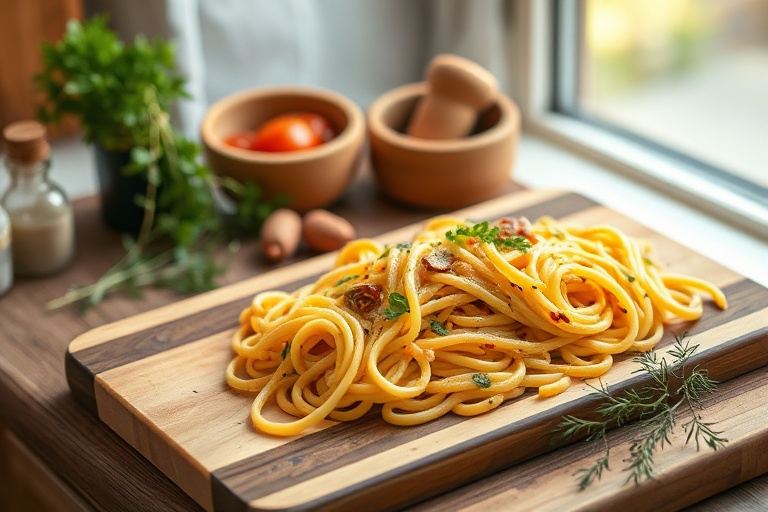
Pasta is a low-purine food: spaghetti has about 7 mg of purines per 100 g. A plate of spaghetti marinara comes to roughly 16 mg. The sauce decides whether a pasta dish is gout-friendly: meat, bacon, clam and shrimp sauces push a single plate to 135-190 mg, about half of a 400 mg daily purine budget.
Purines per Plate by Sauce
Estimates for one restaurant-style plate (85 g dry pasta), built from lab values for each ingredient:
| Dish | Main purine source | Estimated purines | % of 400 mg budget |
|---|---|---|---|
| Spaghetti marinara | tomato | ~16 mg | 4% |
| Pesto pasta | basil, parmesan | ~10 mg | 3% |
| Spaghetti bolognese | 85 g ground beef | ~151 mg | 38% |
| Carbonara | 30 g pancetta or bacon | ~137 mg | 34% |
| Spaghetti alle vongole | 100 g clams | ~143 mg | 36% |
| Shrimp scampi | 100 g shrimp | ~189 mg | 47% |
Pesto has no complete lab breakdown; basil, olive oil and a little parmesan are all low-purine, so it is estimated from the pasta and cheese alone.
Where the Purines Come From
| Ingredient | Purines per 100 g |
|---|---|
| Spaghetti | ~7 mg |
| Tomato | ~7 mg |
| Parmesan | 13 mg |
| Egg | ~1 mg |
| Ground beef | 161 mg |
| Clams | 136 mg |
| Shrimp | 182 mg |
| Cooked bacon | 429 mg |
Making Pasta Gout-Friendly
- Start with a tomato or vegetable sauce. Marinara, arrabbiata, primavera and pesto are all low in purines.
- Halve the meat in bolognese and bulk it out with lentils, mushrooms or finely chopped vegetables. Half the beef cuts the plate to about 80 mg.
- Use a little pancetta, not a lot. Carbonara made with 15 g of pancetta instead of 30 g drops to about 70 mg.
- Treat seafood pasta as your main protein for the day. Clam and shrimp pastas are fine occasionally between flares.
- Whole-wheat pasta is also low in purines and adds fiber, which helps with weight control.
During a Flare vs. Between Flares
- During a flare: pasta with tomato, vegetable or pesto sauce is a good choice. Avoid meat and seafood sauces.
- Between flares: bolognese, carbonara or seafood pasta is OK now and then. Keep the rest of the day low in meat and seafood.
Check Your Own Plate
Restaurant portions vary. The free GoutSnap app estimates purines from a photo of your plate: download for iPhone or Android.
Frequently Asked Questions
Related Foods
- Pizza and gout: purines per slice by topping
- Rice: about 8 mg purines per 100 g
- Whole wheat bread: about 12 mg purines per 100 g
- Ground beef: 161 mg purines per 100 g
- Shrimp: 182 mg purines per 100 g
- Clams: 136 mg purines per 100 g
Sources: USDA and ODS-NIH Database for the Purine Content of Foods, Release 2 (March 2025); Kaneko K, et al. Biol Pharm Bull. 2014;37(5):709-21. Per-plate values are GoutSnap estimates from ingredient weights.
Last Updated: November 13, 2026
Related Content: