High Uric Acid Treatment: Medications, Diet & How to Lower Uric Acid Levels
High Uric Acid Treatment: Medications, Diet & How to Lower Uric Acid Levels
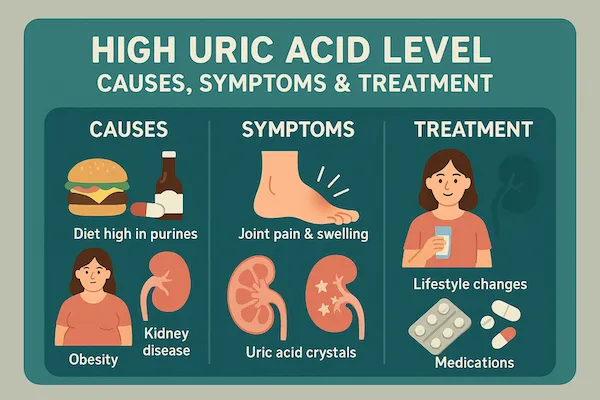
Quick summary (read this first)
- High uric acid is called hyperuricemia and becomes “crystal-forming” above about 6.8 mg/dL.
- The long-term goal for most people with gout is serum uric acid <6 mg/dL (often <5 mg/dL if tophi are present).
- The most effective way to reduce uric acid crystals is to lower uric acid below saturation and keep it there for months/years.
- Treatment usually combines: medication (when appropriate) + diet + hydration + weight management + trigger control.
- If you have severe pain, fever, a red hot joint, or possible kidney stone symptoms, seek urgent medical care.
What is high uric acid?
High uric acid, medically known as hyperuricemia, occurs when uric acid levels in your blood stay above the saturation point (about 6.8 mg/dL). At that level, uric acid can crystallize and deposit in joints (gout) or in the urinary tract (kidney stones).
Normal uric acid ranges (common reference)
| Group | Typical reference range | Often considered “high” |
|---|---|---|
| Men | 3.4–7.0 mg/dL | >7.0 mg/dL |
| Women | 2.4–6.0 mg/dL | >6.0 mg/dL |
Reference ranges vary by lab. Always interpret results with your clinician.
High uric acid treatment goals
Why “lower uric acid levels” matters
Uric acid crystals form and persist when uric acid stays above saturation. Lowering uric acid levels below saturation prevents new crystal formation and gradually dissolves existing deposits.
Target levels (treat-to-target approach)
| Situation | Target serum uric acid |
|---|---|
| Most gout patients | <6 mg/dL |
| Tophi or severe gout | <5 mg/dL (often used) |
| Asymptomatic hyperuricemia | Individualized (often no meds unless high risk) |
When to start medical treatment
Immediate urate-lowering therapy is commonly recommended for
- Recurrent gout attacks (often 2+ per year).
- Tophi (visible urate deposits under skin).
- Uric acid kidney stones.
- Chronic kidney disease with hyperuricemia.
- Persistently very high uric acid (commonly >9 mg/dL).
Consider starting medical treatment for
- First gout attack with high uric acid (commonly >8 mg/dL).
- Strong family history of gout or kidney stones.
- Significant cardiovascular/metabolic risk with persistent hyperuricemia.
You may not need medication (but still need a plan) if
- Asymptomatic hyperuricemia (elevated uric acid but no gout or stones).
- Mild elevation without gout history and with an obvious temporary trigger (diet, dehydration, certain meds).
Medical treatment options (high uric acid treatment)
Medication choices must be individualized to kidney function, other conditions, and drug interactions.
1) Xanthine oxidase inhibitors (XOIs)
These reduce uric acid production by blocking xanthine oxidase.
Allopurinol (Zyloprim)
- Most commonly used urate-lowering medication.
- Often started low and titrated up based on uric acid levels and tolerance.
- Full crystal-dissolving benefits typically require consistent use over time.
Febuxostat (Uloric)
- Alternative when allopurinol isn’t tolerated or isn’t enough.
- Requires clinical judgment regarding cardiovascular risk.
2) Uricosurics (increase uric acid excretion)
Probenecid
- Helps kidneys excrete more uric acid.
- Requires good hydration and is not ideal for many people with kidney disease or stone history.
Lesinurad (Zurampic)
- Used in combination with an XOI in some settings.
- Requires kidney monitoring and clinician oversight.
3) Pegloticase (Krystexxa)
- Reserved for severe, treatment-resistant gout.
- Given IV and can lower uric acid rapidly in selected patients.
Managing flares when starting treatment
Starting urate-lowering therapy can trigger flares early because changing uric acid levels can mobilize existing crystals.
Flare prevention (common strategies your doctor may use)
- Low-dose colchicine, OR
- A low-dose NSAID, OR
- A low-dose corticosteroid if other options aren’t safe.
Acute flare treatment (typical options)
- NSAIDs (if safe for you),
- Colchicine (time-sensitive),
- Corticosteroids.
How to lower uric acid levels fast (first 7–14 days)
These steps can help lower uric acid levels and reduce crystal formation risk quickly. They are not a substitute for medical therapy when medication is needed.
- Hydrate consistently (see hydration section below).
- Stop binge alcohol; avoid beer during flare-prone periods.
- Remove obvious high-purine triggers: organ meats, anchovies/sardines, large portions of red meat.
- Cut sugary drinks and high-fructose intake (soda, sweetened juices).
- Prioritize simple meals: vegetables, whole grains, low-fat dairy, eggs/tofu, and modest portions of lean poultry.
Natural high uric acid treatment (diet + lifestyle)
Dietary modifications (what to eat vs avoid)
Foods to emphasize
- Low-fat dairy (milk, yogurt).
- Vegetables and high-fiber carbs (whole grains).
- Cherries / tart cherry (food-based, not a cure).
- Vitamin C-rich foods (citrus, peppers, berries).
- Coffee (if tolerated).
Foods to limit or avoid (especially if you have gout flares)
| Food category | Examples | Typical guidance |
|---|---|---|
| Organ meats | Liver, kidney, sweetbreads | Avoid |
| High-purine seafood | Anchovies, sardines, mussels | Avoid or keep rare |
| Red meat | Beef, lamb, pork | Limit portion + frequency |
| Alcohol | Beer, spirits | Reduce; avoid during flares |
| Sugary drinks | Soda, sweetened juices | Avoid |
Need to check a specific meal? Use the GoutSnap tools and food database to track purine-heavy patterns over time. (If you publish a Snap/AI page, link it here.)
Reducing uric acid crystals (what actually works)
“Reducing uric acid crystals” is mainly about time below saturation.
The 3-step crystal reduction model
- Lower uric acid below saturation (often <6 mg/dL for gout).
- Maintain it consistently (no “on/off” patterns).
- Prevent early flares during crystal mobilization (prophylaxis + trigger control).
How long does it take to dissolve crystals?
| Crystal burden | Typical timeline (with consistent urate control) |
|---|---|
| Small deposits | 6–12 months |
| Moderate tophi | 1–2 years |
| Large tophi | 2–5 years |
Hydration therapy
Adequate hydration is one of the simplest ways to support uric acid excretion.
Daily targets
- Minimum: ~2.5 liters/day
- Often better: ~3 liters/day (varies by body size, climate, kidney/heart conditions)
Practical hydration schedule
- 16 oz upon waking.
- 8 oz before each meal.
- 8 oz after each meal.
- 8 oz mid-afternoon.
- 8 oz before bed (if it doesn’t disrupt sleep).
- Extra fluids with exercise/heat.
Weight management (safe approach)
Excess weight is strongly associated with higher uric acid.
- Aim for gradual loss (about 1–2 lb/week).
- Avoid fasting/crash diets (can trigger flares).
- Combine modest calorie reduction with regular low-impact movement.
Exercise (gout-friendly)
- Walking, cycling, swimming, and yoga are usually joint-friendly.
- Avoid high-intensity training during active flares.
- Hydrate before/during/after exercise.
Natural supplements (use carefully)
Supplements are adjuncts, not replacements for medication when indicated.
Commonly used supplements
- Vitamin C (often 500 mg/day is used).
- Tart cherry extract or tart cherry juice.
- Quercetin (human evidence is limited).
- Bromelain (for inflammation support; evidence varies).
Supplements/meds that can raise uric acid or worsen gout in some people
- Niacin (B3) may raise uric acid.
- Low-dose aspirin can reduce uric acid excretion in some people.
- Some diuretics can raise uric acid.
Treatment monitoring
Lab testing schedule (typical)
Initial phase (first 6 months)
- Uric acid: every 4–6 weeks while adjusting treatment.
- Kidney function: every ~3 months.
- Liver function: as clinically indicated (especially with some medications).
Maintenance
- Uric acid: every 3–6 months.
- Kidney function: every 6–12 months.
Treatment goals
| Metric | Goal |
|---|---|
| Serum uric acid | <6 mg/dL (often <5 mg/dL if tophi) |
| Gout flares | Reduced frequency → ideally none |
| Tophi | Gradual shrinkage over 1–3+ years |
When to see a doctor
Seek medical care for:
- First gout attack (needs diagnosis).
- Recurrent attacks despite lifestyle changes.
- Uric acid consistently very high (commonly >9 mg/dL).
- Flank pain, blood in urine, or kidney stone symptoms.
- Fever + joint pain (rule out infection).
- Medication side effects.
Frequently asked questions
Q: What is the best high uric acid treatment?
A: For gout, the most effective long-term approach is usually treat-to-target urate lowering (often medication) plus diet, hydration, and trigger control.
Q: How long does it take to lower uric acid levels?
A: Uric acid can drop within weeks, but dissolving crystals and preventing flares often takes months of consistent control.
Q: Can diet alone treat high uric acid?
A: Diet and lifestyle can help, especially in mild hyperuricemia, but many people with gout still need medication to reach target uric acid.
Medically Reviewed by: Board-Certified Rheumatologist
Last Updated: January 20, 2026
Related content