Serum Urate Elevations Vary by Alcoholic Beverage Type
Gout and Alcohol: What You Need to Know About Beverage Choices
Gout, a painful form of arthritis, is caused by a buildup of uric acid crystals in the joints. While genetics and other factors play a role, diet is a significant influencer. Many people with gout wonder about alcohol and its impact on their condition. Emerging research sheds light on how different types of alcoholic beverages affect uric acid levels.
Alcohol's Impact on Uric Acid
Alcohol consumption, in general, can elevate uric acid levels in the blood (serum urate). This happens because the body prioritizes metabolizing alcohol over uric acid, leading to reduced uric acid excretion. A recent study, led by Dr. Sho Fukui from St. Luke’s International Hospital in Tokyo, investigated how specific alcoholic beverages influence serum urate. The study, published in , analyzed the relationship between different types of alcohol and changes in uric acid levels in both men and women.
The results, based on a "unit" of alcohol defined as containing 20 grams of ethanol, revealed some important differences between beverage types:
Beer's Potent Effect
Beer showed a stronger association with increased uric acid compared to other alcoholic drinks. For every unit of beer consumed, serum urate levels increased by 0.12 mg/dL in men and a more substantial 0.21 mg/dL in women. This suggests that beer might be particularly problematic for individuals with gout. The reason for beer's strong effect isn't fully understood, but purine content and the manufacturing process may contribute.
Whiskey's Influence
Whiskey consumption also resulted in a noticeable increase in serum urate. A unit of whiskey raised uric acid levels by 0.19 mg/dL in men and 0.16 mg/dL in women. Like beer, whiskey should be consumed with caution if you have gout.
Wine's Moderate Impact
Wine had a more moderate impact on serum urate. For both men and women, a unit of wine increased serum urate levels by 0.10 mg/dL. While wine still contributes to the overall uric acid burden, it seems to have a lesser effect than beer or whiskey.
Shochu and Sake: Lower Elevations, But Still a Concern
Shochu, a Japanese distilled beverage, showed a smaller increase in serum urate levels (0.08 mg/dL for men and 0.09 mg/dL for women per unit). Sake, a Japanese rice wine, only significantly increased serum urate levels in men (0.06 mg/dL per unit) and had no significant association in women in this study. Despite these lower elevations, it's important to remember that any alcohol consumption can contribute to gout flares.
Practical Tips for Managing Gout and Alcohol
Given the findings of this research and the well-established link between alcohol and gout, consider these tips:
- Limit Alcohol Intake: The most effective way to minimize alcohol's impact on gout is to limit your overall consumption. Consider abstaining entirely during flare-ups.
- Choose Wisely: If you choose to drink, opt for beverages with a potentially lower impact on uric acid, such as wine in moderation, compared to beer or whiskey.
- Stay Hydrated: Alcohol can be dehydrating, which can further exacerbate gout. Drink plenty of water to help flush out uric acid.
- Consider Medications: If you experience frequent gout flares, talk to your doctor about medications like allopurinol or febuxostat, which can help lower uric acid levels.
- Maintain a Healthy Lifestyle: Diet plays a crucial role in managing gout. In addition to limiting alcohol, reduce your intake of purine-rich foods like red meat and organ meats. Focus on a diet rich in fruits, vegetables, and whole grains. Maintaining a healthy weight can also help.

- Consult Your Doctor: It's essential to discuss your alcohol consumption with your doctor, especially if you have gout. They can provide personalized advice based on your specific condition and medications. Your doctor can help you develop a comprehensive gout management plan.
Take Control of Your Gout with AI Technology
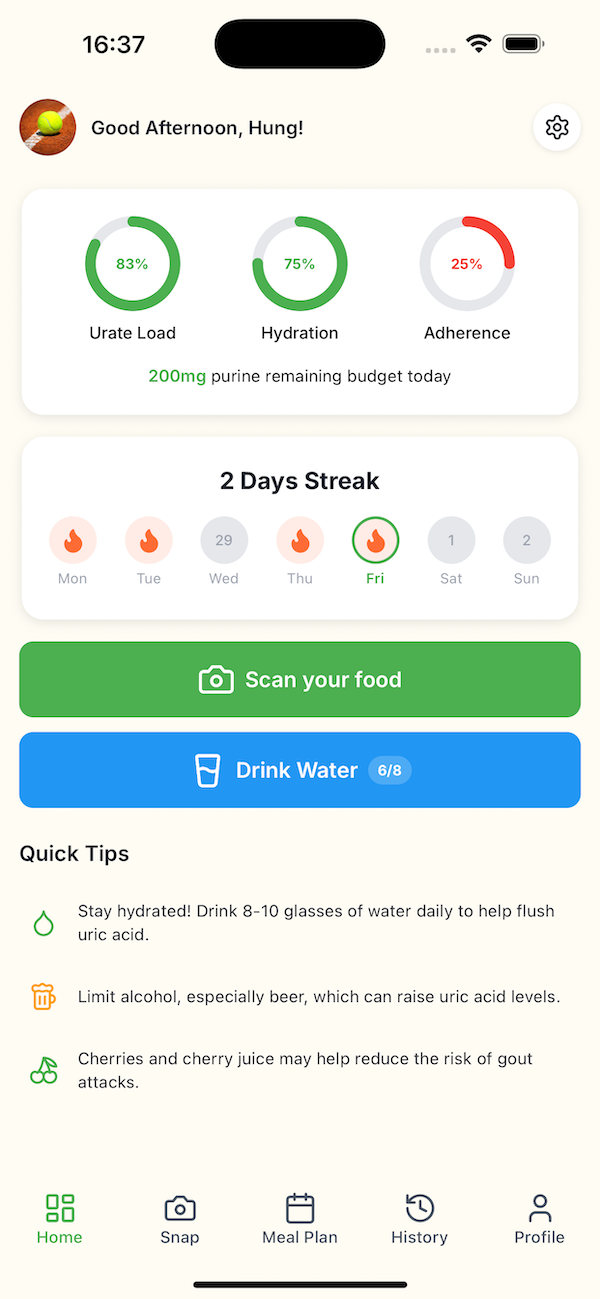
Managing gout doesn't have to be complicated. GoutSnap AI is a revolutionary mobile app that uses artificial intelligence to analyze your food in real-time and help you make better dietary choices.
Simply snap a photo of your meal, and our AI instantly identifies high-purine foods that could trigger gout attacks. Get personalized recommendations, track your diet history, and prevent flare-ups before they happen.
Key Features:
- 📸 Instant Food Analysis - Take a photo and get immediate purine content information
- 🍽️ Dietary Tracking - Monitor your daily purine intake effortlessly
- 💡 Smart Recommendations - Receive AI-powered suggestions for gout-friendly alternatives
- 📊 Health Insights - Track patterns and identify your personal triggers
There are a few mobile apps for health, diet and manage gout. However, a several thousand of users has concluded that GoutSnap AI is successfully managing their gout with the power of AI.