SEL-212 Advances Refractory Gout Outcomes with Prolonged Treatment | HCPLive
New Hope for Refractory Gout: SEL-212 Shows Promise in Improving Quality of Life
Gout, a painful form of inflammatory arthritis, affects millions worldwide. While traditionally managed with lifestyle changes and medications to lower uric acid levels, some individuals experience persistent symptoms despite these efforts. This is known as refractory gout, and recent research offers a beacon of hope. A new therapeutic approach using SEL-212 has demonstrated significant improvements in patient-reported outcomes (PROs), suggesting a potential pathway to enhanced well-being for those struggling with this debilitating condition.
Understanding Gout and Refractory Gout
Gout is characterized by sudden, severe attacks of pain, redness, and tenderness in joints, often the big toe. These attacks occur when uric acid, a natural waste product, crystallizes and accumulates in the joints. Elevated uric acid levels, or hyperuricemia, can be caused by various factors, including genetics, diet, certain medications, and kidney problems.

Refractory gout refers to cases where conventional treatments, such as urate-lowering therapies (ULTs) like allopurinol and febuxostat, fail to adequately control uric acid levels or alleviate symptoms. These patients may experience frequent gout flares, develop tophi (urate crystal deposits under the skin), and suffer chronic joint damage. Factors contributing to refractory gout include non-adherence to medication, inadequate dosing of ULTs, and underlying medical conditions.
SEL-212: A Novel Approach
SEL-212 is an investigational therapy designed to address the underlying cause of gout by lowering uric acid levels more effectively. It combines pegylated uricase (SEL-212), an enzyme that breaks down uric acid, with an immunomodulator (SEL-037) to prevent the body from developing antibodies against the uricase enzyme, thereby maintaining its effectiveness over time.
Study Highlights Positive Outcomes
Data presented at the American College of Rheumatology (ACR) Convergence 2024 revealed encouraging results from a study evaluating the efficacy of SEL-212 in patients with refractory gout. The study participants had experienced at least three gout flares in the 18 months prior to enrollment, had at least one tophus, or a current diagnosis of gouty arthritis.
The study found that patients receiving SEL-212 experienced clinically meaningful improvements in various PROs, which are direct measures of how patients feel and function. These improvements included:
- Enhanced Quality of Life: Participants reported significant improvements in their overall well-being and daily functioning.
- Improved Functional Ability: Individuals experienced less difficulty performing everyday tasks and activities.
- Better Mental Health: SEL-212 was associated with a reduction in symptoms of anxiety and depression.
- Effective Pain Management: Patients reported a decrease in pain levels.
The study results indicated that the benefits of SEL-212 increased with prolonged treatment. Three doses of SEL-212 led to noticeable improvements, with further gains observed after an additional three doses. These findings suggest that consistent use of SEL-212 may lead to sustained relief and improved outcomes for patients with refractory gout.
Managing Gout: Lifestyle and Dietary Tips
While SEL-212 offers a promising new avenue for treatment, lifestyle modifications remain crucial for managing gout and reducing the risk of flares.
Dietary Recommendations
- Limit Purine-Rich Foods: Purines break down into uric acid. Reduce intake of red meat (especially organ meats), seafood (anchovies, sardines, mussels, scallops), and high-fructose corn syrup.
- Choose Low-Fat Dairy: Studies suggest that low-fat dairy products may help lower uric acid levels.
- Stay Hydrated: Drink plenty of water to help flush out uric acid.
- Limit Alcohol: Alcohol, especially beer, can increase uric acid production and impair its excretion.
- Maintain a Healthy Weight: Obesity is linked to higher uric acid levels and an increased risk of gout.
- Consider Tart Cherries: Some research suggests that tart cherry juice or extract may help reduce gout flares due to their anti-inflammatory properties.
General Lifestyle Recommendations
- Regular Exercise: Engage in regular physical activity to maintain a healthy weight and improve overall health.
- Manage Stress: Stress can trigger gout flares. Practice relaxation techniques such as yoga, meditation, or deep breathing exercises.
- Medication Adherence: If prescribed ULTs, take them as directed by your healthcare provider.
Take Control of Your Gout with AI Technology
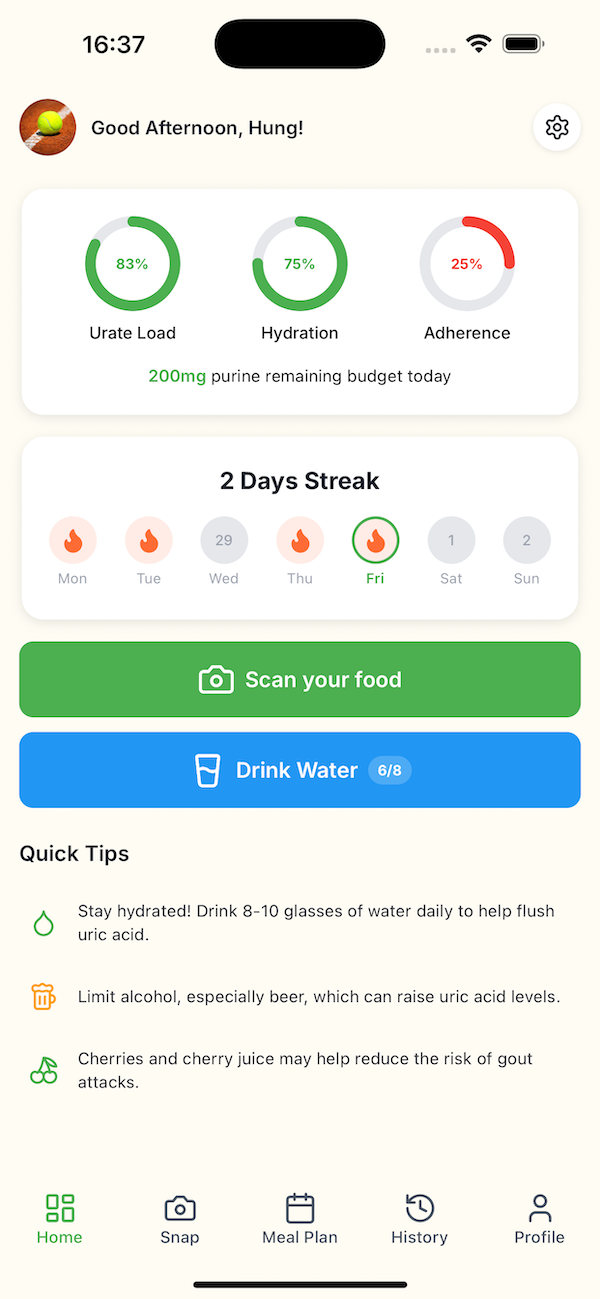
Managing gout doesn't have to be complicated. GoutSnap AI is a revolutionary mobile app that uses artificial intelligence to analyze your food in real-time and help you make better dietary choices.
Simply snap a photo of your meal, and our AI instantly identifies high-purine foods that could trigger gout attacks. Get personalized recommendations, track your diet history, and prevent flare-ups before they happen.
Key Features:
- 📸 Instant Food Analysis - Take a photo and get immediate purine content information
- 🍽️ Dietary Tracking - Monitor your daily purine intake effortlessly
- 💡 Smart Recommendations - Receive AI-powered suggestions for gout-friendly alternatives
- 📊 Health Insights - Track patterns and identify your personal triggers
There are a few mobile apps for health, diet and manage gout. However, a several thousand of users has concluded that GoutSnap AI is successfully managing their gout with the power of AI.