SAP-001 Demonstrates “Best in Class” Data for Gout With Hyperuricemia Refractory to SOC XOI Therapy | HCPLive
A Potential Breakthrough for Gout: New Hope for Those Unresponsive to Traditional Treatments
Gout, a painful form of arthritis characterized by sudden, severe attacks of pain, redness, and swelling in the joints (often the big toe), affects millions worldwide. While standard treatments like xanthine oxidase inhibitors (XOIs) can effectively manage the condition by lowering uric acid levels in the blood, some individuals don't respond adequately to these therapies. This is known as refractory gout, and it presents a significant challenge for both patients and healthcare providers.
Understanding Refractory Gout
What Makes Gout "Refractory"?
Gout is considered refractory when standard treatments, typically XOIs like allopurinol or febuxostat, fail to lower uric acid levels sufficiently (below 6 mg/dL) despite being used at appropriate dosages. This can lead to ongoing gout flares, the formation of tophi (urate crystal deposits under the skin), and chronic joint damage. Several factors can contribute to refractory gout, including:
- Kidney problems preventing adequate uric acid excretion
- Difficulty tolerating or adhering to XOI medications
- Genetic predisposition
- Other underlying health conditions
Current Treatment Options for Refractory Gout
When standard therapies fail, doctors may consider alternative approaches such as:
- Increasing the XOI Dosage: Under careful monitoring, the dosage of allopurinol or febuxostat may be increased, although this is not always effective and may increase the risk of side effects.
- Uricosurics: These medications (like probenecid) help the kidneys eliminate more uric acid. However, they are not suitable for everyone, especially those with kidney disease or a history of kidney stones.
- Pegloticase: This intravenous medication breaks down uric acid in the body. It's a potent treatment but carries a risk of infusion reactions and is typically reserved for severe cases of refractory gout.
SAP-001: A Promising New Approach
Recently, there's been exciting news regarding a potential new treatment for refractory gout. A compound called SAP-001, developed by Shanton Pharma, is showing promising results in clinical trials.
How SAP-001 Works
SAP-001 is an investigational oral medication that works through a novel mechanism of action (MOA). Unlike traditional XOIs that reduce uric acid production, SAP-001 targets a specific transporter in the kidneys, promoting increased uric acid excretion. This unique approach may offer a significant advantage for patients whose kidneys aren't effectively eliminating uric acid.
Clinical Trial Results
Early phase 2b clinical trial data for SAP-001 has demonstrated remarkable efficacy. According to reports, the compound achieved nearly 100% efficacy in lowering serum uric acid levels in patients with refractory gout who hadn't responded well to standard XOI therapy. Furthermore, the study assessed the frequency of gout flares, along with safety and tolerability and had positive outcomes.
What This Means for Gout Patients
These findings offer a beacon of hope for individuals with refractory gout who have limited treatment options. If SAP-001 continues to demonstrate safety and efficacy in pivotal studies, it could become a "best-in-class" treatment, providing a much-needed alternative for managing this challenging condition. The possibility of an oral medication that effectively lowers uric acid levels by targeting kidney function is particularly exciting, as it could offer a more convenient and potentially safer option compared to intravenous therapies.
Lifestyle and Dietary Strategies for Managing Gout
While new medications offer promise, lifestyle and dietary modifications remain crucial for managing gout, even in refractory cases. Here are some actionable tips:
- Limit Purine-Rich Foods: Foods high in purines, such as red meat, organ meats (liver, kidney), and certain seafood (anchovies, sardines, mussels), can increase uric acid levels. Moderation is key.
- Reduce Alcohol Consumption: Alcohol, especially beer, can interfere with uric acid excretion. Limit or avoid alcohol intake.
- Stay Hydrated: Drinking plenty of water helps the kidneys flush out uric acid. Aim for at least 8 glasses of water per day.
- Maintain a Healthy Weight: Obesity increases the risk of gout. Losing weight can help lower uric acid levels and reduce the frequency of gout flares.
- Choose Low-Fat Dairy: Studies suggest that low-fat dairy products may help lower uric acid levels.
- Consider Tart Cherry Juice or Extract: Some research indicates that tart cherry juice or extract may help reduce gout flares due to its anti-inflammatory properties.
- Manage Stress: Stress can trigger gout flares. Practice relaxation techniques like yoga, meditation, or deep breathing exercises.

Take Control of Your Gout with AI Technology
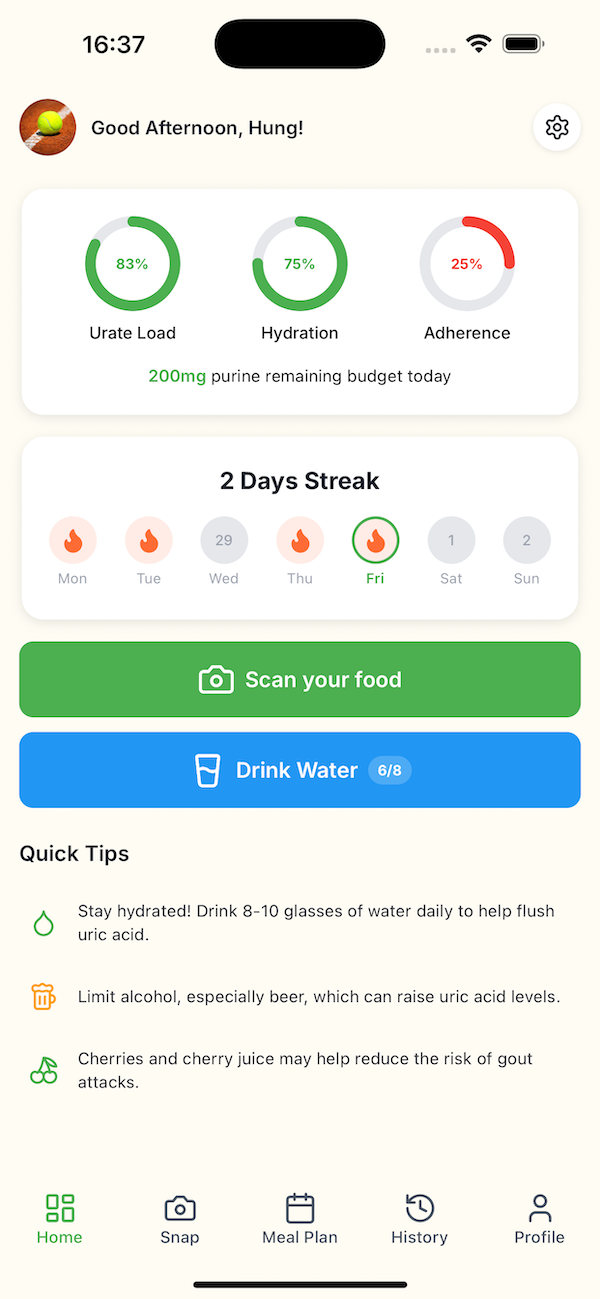
Managing gout doesn't have to be complicated. GoutSnap AI is a revolutionary mobile app that uses artificial intelligence to analyze your food in real-time and help you make better dietary choices.
Simply snap a photo of your meal, and our AI instantly identifies high-purine foods that could trigger gout attacks. Get personalized recommendations, track your diet history, and prevent flare-ups before they happen.
Key Features:
- 📸 Instant Food Analysis - Take a photo and get immediate purine content information
- 🍽️ Dietary Tracking - Monitor your daily purine intake effortlessly
- 💡 Smart Recommendations - Receive AI-powered suggestions for gout-friendly alternatives
- 📊 Health Insights - Track patterns and identify your personal triggers
There are a few mobile apps for health, diet and manage gout. However, a several thousand of users has concluded that GoutSnap AI is successfully managing their gout with the power of AI.