Intensive Gout Treatment Meets Urate Goal, Lowers Tophi Burden
Gout Management: Tight Control for Better Outcomes
Gout, a painful form of inflammatory arthritis, is caused by a buildup of uric acid crystals in the joints. While managing gout often involves lifestyle changes and medication, a new study highlights the benefits of a more intensive, targeted approach.
The TICOG Trial: Tight Control of Gout
The "Tight Control of Gout" (TICOG) trial, presented at the American College of Rheumatology (ACR) 2022 Annual Meeting, investigated the effectiveness of a "treat-to-target" strategy for gout management. This approach focuses on aggressively lowering serum urate levels to a specific goal, in this case, below 5 mg/dL (300 μmol/L).
[Image of Gouty Tophi - You will need to provide the actual image]
The study, conducted at Musgrave Park Hospital in Belfast, compared a "tight-control" group with a "conventional management" group. Participants in both groups received uric acid-lowering therapy (ULT), starting with allopurinol at 100 mg/day, lifestyle advice, and gout education. If needed, febuxostat (Uloric) 80mg daily was used as a second-line agent. Uricosuric drugs were also employed as third-line agents. All patients received colchicine or NSAID prophylaxis for the first 6 months to prevent gout flares.
The key difference was the intensity of monitoring and treatment adjustments. In the conventional management group, urate levels were reviewed every 6 months, with ULT adjustments made by primary care physicians between reviews. In the tight-control group, patients received monthly ULT adjustments by a rheumatologist and specialist pharmacist.
Significant Improvements with Tight Control
The results demonstrated that the tight-control strategy was significantly more effective in lowering serum urate levels, reducing tophus size (urate crystal deposits under the skin, often near joints), and improving joint inflammation (synovitis) as assessed by ultrasound.
These findings suggest that a more proactive and closely monitored approach to gout management can lead to better clinical outcomes.
Is Specialist Care the Answer?
Dr. Sarah Black, who presented the findings, raised an important question: "Based on these outcomes, we question whether gout is best managed in primary or secondary care." She suggested that specialist gout clinics, staffed by rheumatologists, specialist nurses, and pharmacists, could provide the focused patient education and intensive management needed to achieve optimal outcomes.
Practical Implications for Gout Management
The TICOG trial underscores the importance of actively managing gout to reach a target serum urate level. Here are some practical tips for managing gout:
- Know Your Target: Work with your doctor to determine your target serum urate level. Aim for below 5 mg/dL (300 μmol/L) as suggested by this study, but your specific target may vary based on individual factors.
- Medication Adherence: Take your ULT medication as prescribed. These medications are crucial for lowering uric acid levels and preventing gout flares.
- Regular Monitoring: Have your serum urate levels checked regularly, especially when starting or adjusting medication.
- Lifestyle Modifications: Combine medication with lifestyle changes, such as:
- Dietary Changes: Limit purine-rich foods like red meat, organ meats, and certain seafood. Reduce intake of sugary drinks and alcohol, especially beer.
- Hydration: Drink plenty of water to help flush out uric acid.
- Weight Management: If you are overweight or obese, losing weight can help lower uric acid levels.
- Flare Management: Have a plan in place with your doctor for managing gout flares. This may include medications like NSAIDs or colchicine.
- Consider Specialist Referral: If you are struggling to manage your gout effectively, ask your primary care physician about a referral to a rheumatologist.
Study Limitations
The TICOG trial was a single-center, nonblinded study, which can introduce bias. Furthermore, the trial excluded patients with significant renal impairment, liver impairment, or other severe medical conditions. The results may not be generalizable to all gout patients.
Take Control of Your Gout with AI Technology
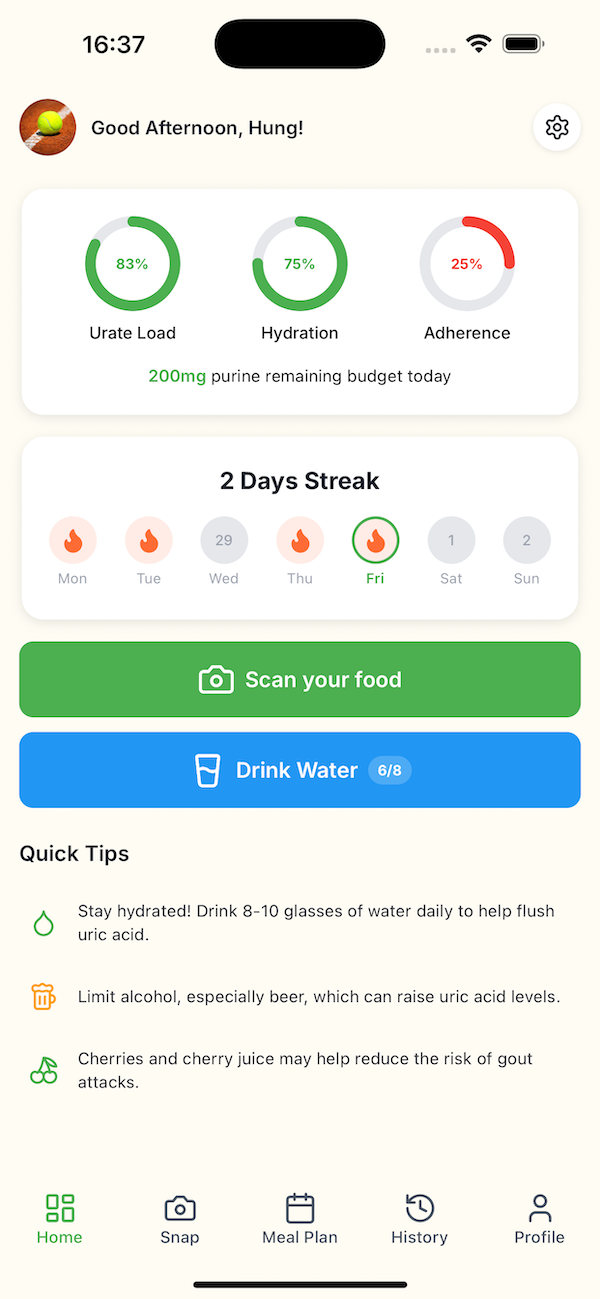
Managing gout doesn't have to be complicated. GoutSnap AI is a revolutionary mobile app that uses artificial intelligence to analyze your food in real-time and help you make better dietary choices.
Simply snap a photo of your meal, and our AI instantly identifies high-purine foods that could trigger gout attacks. Get personalized recommendations, track your diet history, and prevent flare-ups before they happen.
Key Features:
- 📸 Instant Food Analysis - Take a photo and get immediate purine content information
- 🍽️ Dietary Tracking - Monitor your daily purine intake effortlessly
- 💡 Smart Recommendations - Receive AI-powered suggestions for gout-friendly alternatives
- 📊 Health Insights - Track patterns and identify your personal triggers
There are a few mobile apps for health, diet and manage gout. However, a several thousand of users has concluded that GoutSnap AI is successfully managing their gout with the power of AI.