Guidelines for Treating Gout
Taking Control of Gout: A Guide to Effective Treatment
Gout, a painful form of inflammatory arthritis, affects millions worldwide. It's caused by a buildup of uric acid crystals in the joints, leading to sudden and severe pain, swelling, redness, and tenderness. While the pain can be debilitating, effective management strategies exist. This guide provides insights into current recommendations for treating gout, empowering you to take control of your health.
Understanding Gout Management
Managing gout involves a multi-faceted approach that combines medication and lifestyle modifications. The goal is to lower uric acid levels in the blood, preventing crystal formation and reducing the frequency and severity of gout flares.
Medication: Lowering Uric Acid
For many individuals, medication is a crucial part of gout management. Guidelines strongly recommend starting urate-lowering therapy (ULT) for those experiencing frequent flares or signs of joint damage.
Who Should Consider Medication?
ULT is strongly recommended for individuals who:
- Have tophi (nodules of uric acid crystals under the skin).
- Show radiographic evidence of joint damage caused by gout.
- Experience two or more gout flares per year.
Allopurinol: A First-Line Treatment
Allopurinol is generally recommended as the first-line urate-lowering medication for most individuals with gout. It works by reducing the production of uric acid in the body.
The "Treat-to-Target" Approach
A key principle in gout management is the "treat-to-target" approach. This involves regularly monitoring uric acid levels and adjusting the dosage of urate-lowering medication to achieve and maintain a target level of less than 6 mg/dL (milligrams per deciliter). This approach is more effective than using a fixed dose of medication without monitoring uric acid levels. Regular blood tests are necessary to ensure the medication is effectively lowering uric acid to the target level.
Staying the Course
If you are taking urate-lowering medication and are not experiencing flares or tophi, continuing the medication is generally recommended. Stopping ULT can lead to a rebound in uric acid levels and an increased risk of future flares.
Lifestyle Modifications: Supporting Your Treatment
While medication is often necessary, lifestyle modifications play a vital role in managing gout and reducing the risk of flares.
- Dietary Changes: Limiting foods high in purines, which break down into uric acid, is often recommended. These include red meat, organ meats (liver, kidneys), shellfish, and sugary drinks. Embrace foods that can help lower uric acid such as cherries, coffee, and dairy products.
- Hydration: Drink plenty of water to help flush uric acid from your system.
- Alcohol Consumption: Limit alcohol intake, especially beer, as it can increase uric acid levels.
- Weight Management: Maintaining a healthy weight can reduce uric acid production.
- Regular Exercise: Engage in regular physical activity to promote overall health and weight management.
Considering Other Medications
Certain medications, such as diuretics like hydrochlorothiazide (often used to treat high blood pressure), can increase uric acid levels. If you are taking hydrochlorothiazide for hypertension, your doctor may conditionally recommend switching to an alternative medication, such as losartan, which can actually help lower uric acid.

Take Control of Your Gout with AI Technology
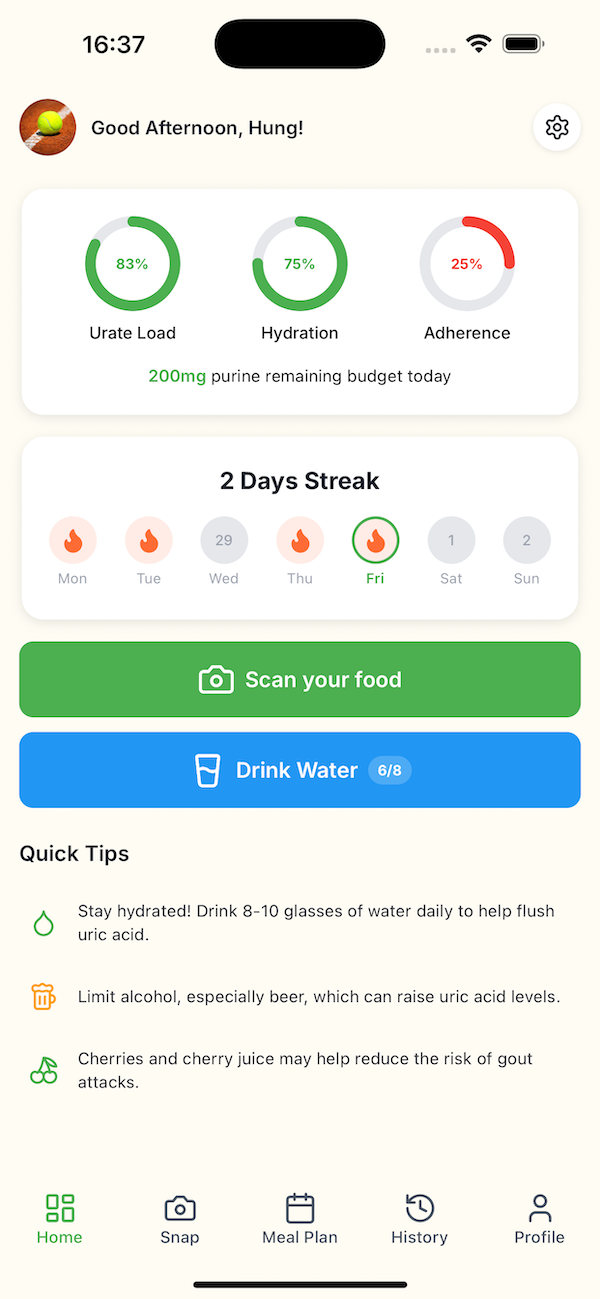
Managing gout doesn't have to be complicated. GoutSnap AI is a revolutionary mobile app that uses artificial intelligence to analyze your food in real-time and help you make better dietary choices.
Simply snap a photo of your meal, and our AI instantly identifies high-purine foods that could trigger gout attacks. Get personalized recommendations, track your diet history, and prevent flare-ups before they happen.
Key Features:
- 📸 Instant Food Analysis - Take a photo and get immediate purine content information
- 🍽️ Dietary Tracking - Monitor your daily purine intake effortlessly
- 💡 Smart Recommendations - Receive AI-powered suggestions for gout-friendly alternatives
- 📊 Health Insights - Track patterns and identify your personal triggers
There are a few mobile apps for health, diet and manage gout. However, a several thousand of users has concluded that GoutSnap AI is successfully managing their gout with the power of AI.