Gout Gout storms to 400m victory in schoolboy swansong before setting sights on world stage: “That’s the next step”
Gout: Understanding, Managing, and Living Well
Gout is a painful form of inflammatory arthritis caused by a buildup of uric acid crystals in the joints. While the name might conjure images of historical figures indulging in rich foods, gout can affect anyone, regardless of their social status. Understanding gout is the first step towards managing it effectively and living a healthier, more comfortable life.
What is Gout?
Gout occurs when your body either produces too much uric acid or doesn't eliminate enough of it. Uric acid is a natural waste product formed from the breakdown of purines, substances found in your body and in many foods. When uric acid levels become too high (a condition called hyperuricemia), crystals can form in the joints, leading to sudden and intense attacks of pain, swelling, redness, and tenderness. These attacks, often called gout flares, can last for days or even weeks.
Commonly affected joints include the big toe, ankles, knees, and fingers. Over time, chronic gout can lead to joint damage, tophi (uric acid crystal deposits under the skin), and kidney problems.
Causes and Risk Factors
Several factors can increase your risk of developing gout:
- Diet: A diet high in purines, found in red meat, organ meats (liver, kidneys), seafood (especially shellfish and oily fish like sardines and anchovies), and sugary drinks, can increase uric acid levels.
- Obesity: Excess weight is associated with increased uric acid production and decreased kidney function, hindering uric acid elimination.
- Medical Conditions: Certain conditions, such as high blood pressure, diabetes, metabolic syndrome, kidney disease, and heart disease, can increase the risk of gout.
- Medications: Some medications, including diuretics (water pills) and low-dose aspirin, can raise uric acid levels.
- Family History: Gout tends to run in families.
- Gender and Age: Gout is more common in men, particularly between the ages of 30 and 50. Women are more likely to develop gout after menopause.
- Alcohol Consumption: Beer, in particular, is high in purines and can increase uric acid levels.
Symptoms of Gout
Gout symptoms can vary from person to person, but typically include:
- Sudden, Intense Joint Pain: Usually affecting one joint at a time, often the big toe.
- Swelling, Redness, and Tenderness: The affected joint becomes inflamed and extremely sensitive to touch.
- Limited Range of Motion: Difficulty moving the affected joint.
- Lingering Discomfort: After the acute pain subsides, some joint discomfort may persist.
Diagnosis and Treatment
If you suspect you have gout, it's crucial to see a doctor for diagnosis. They will typically perform a physical exam, review your medical history, and order tests, including:
- Joint Fluid Test: Fluid is extracted from the affected joint and examined under a microscope for uric acid crystals.
- Blood Test: To measure uric acid levels in the blood.
Treatment for gout focuses on two main goals: relieving pain and inflammation during acute attacks and preventing future flares and long-term complications.
- Medications for Acute Attacks: Nonsteroidal anti-inflammatory drugs (NSAIDs), colchicine, and corticosteroids can help reduce pain and inflammation during a gout flare.
- Medications to Lower Uric Acid Levels: Allopurinol and febuxostat help reduce uric acid production, while probenecid helps the kidneys eliminate uric acid. These medications are typically used for long-term management.
Lifestyle Modifications for Gout Management
In addition to medications, lifestyle changes play a crucial role in managing gout:
- Dietary Changes:
- Limit Purine-Rich Foods: Reduce consumption of red meat, organ meats, seafood, and sugary drinks.
- Choose Low-Purine Foods: Focus on fruits, vegetables, whole grains, and low-fat dairy.
- Stay Hydrated: Drink plenty of water to help flush out uric acid.
- Limit Alcohol: Especially beer. If you choose to drink alcohol, do so in moderation (no more than one drink per day for women and two drinks per day for men).
- Weight Management: Maintaining a healthy weight can help reduce uric acid levels and improve overall health.
- Regular Exercise: Regular physical activity can help you maintain a healthy weight and reduce the risk of gout flares.
- Avoid Dehydration: Ensure adequate fluid intake, especially during exercise or hot weather.
Living with Gout
Living with gout requires ongoing management and adherence to treatment plans. Regular follow-up appointments with your doctor are essential to monitor uric acid levels and adjust medications as needed. Educating yourself about gout and actively participating in your care can empower you to manage the condition effectively and improve your quality of life.
Take Control of Your Gout with AI Technology
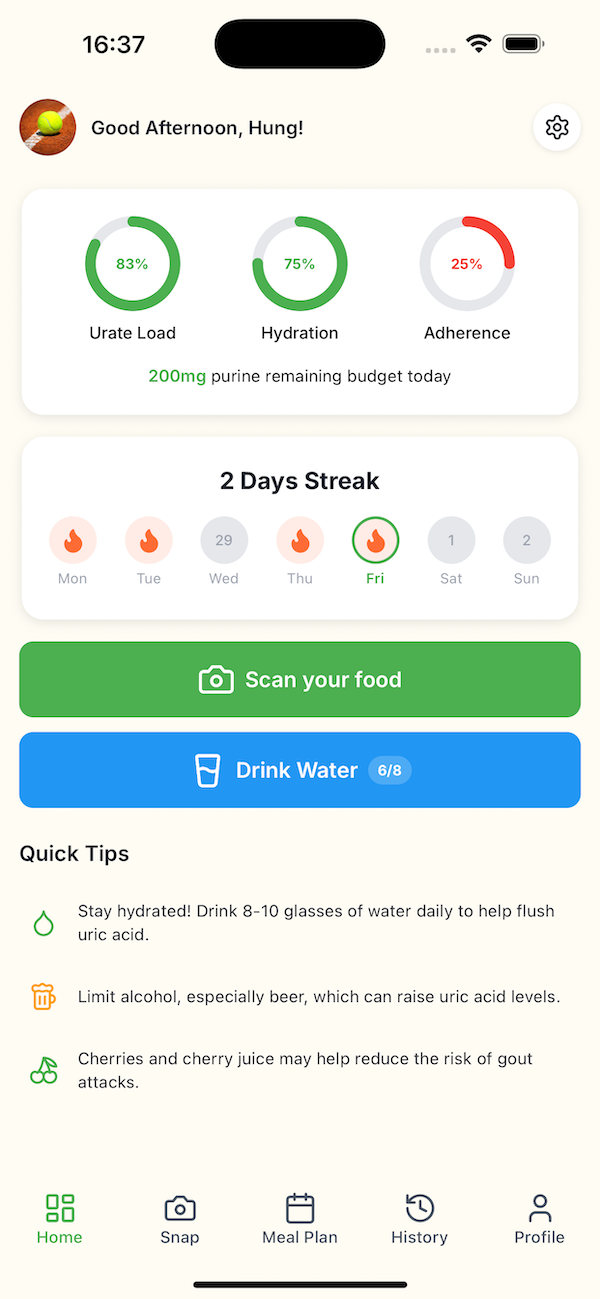
Managing gout doesn't have to be complicated. GoutSnap AI is a revolutionary mobile app that uses artificial intelligence to analyze your food in real-time and help you make better dietary choices.
Simply snap a photo of your meal, and our AI instantly identifies high-purine foods that could trigger gout attacks. Get personalized recommendations, track your diet history, and prevent flare-ups before they happen.
Key Features:
- 📸 Instant Food Analysis - Take a photo and get immediate purine content information
- 🍽️ Dietary Tracking - Monitor your daily purine intake effortlessly
- 💡 Smart Recommendations - Receive AI-powered suggestions for gout-friendly alternatives
- 📊 Health Insights - Track patterns and identify your personal triggers
There are a few mobile apps for health, diet and manage gout. However, a several thousand of users has concluded that GoutSnap AI is successfully managing their gout with the power of AI.