Early Urate-Lowering Treatment did not Increase Flare Severity, Duration in Patients with Gouty Arthritis | HCPLive
Gout: Early Treatment Doesn't Worsen Flares, Study Shows
Gout, a painful form of arthritis, affects millions worldwide. Characterized by sudden and severe attacks of pain, swelling, redness, and tenderness in the joints, most often in the big toe, gout can significantly impact quality of life. The good news? Gout is manageable, and new research suggests early treatment is both safe and effective.
Understanding Gout: The Uric Acid Connection
Gout occurs when uric acid, a natural waste product, builds up in the blood (a condition called hyperuricemia). When uric acid levels are too high, crystals can form in the joints, triggering inflammation and intense pain. Factors that contribute to hyperuricemia include:
- Diet: High intake of purine-rich foods like red meat, organ meats, and certain seafood.
- Alcohol: Especially beer, which is high in purines.
- Medical Conditions: Kidney disease, diabetes, and high blood pressure.
- Medications: Certain diuretics (water pills).
- Genetics: A family history of gout increases your risk.
New Research: Early Urate-Lowering Therapy (ULT) is Safe
Traditionally, doctors sometimes hesitated to start urate-lowering therapy (ULT) immediately after a gout diagnosis, fearing it could worsen flare-ups. However, a recent study published in the European Journal of Medical Research offers encouraging evidence that early ULT is safe and doesn't increase the severity or duration of gout flares when combined with prophylactic treatment.
The study focused on patients with gouty arthritis (GA), a chronic condition with recurring acute episodes. Researchers found that early and aggressive control of hyperuricemia using probenecid (a medication that helps the kidneys eliminate uric acid) at a dose of 500 mg, combined with prophylactic treatment, did not significantly worsen gout flares.
Prophylactic Treatment: Your Shield Against Flares
Prophylactic treatment, used in conjunction with ULT, aims to prevent gout flares that can sometimes occur when uric acid levels are being lowered. Common prophylactic treatments include:
- Colchicine: A medication that reduces inflammation.
- Low-Dose NSAIDs: Nonsteroidal anti-inflammatory drugs, like ibuprofen or naproxen, used in low doses.
The study highlights that using these prophylactic treatments alongside ULT can effectively minimize the risk of flare-ups during the initial treatment phase. The researchers specifically noted that in their study, colchicine was administered with intermittent NSAIDs, resulting in no significant increase in gout flares.
Actionable Advice: Taking Control of Your Gout
Here are some practical steps you can take to manage gout effectively:
- See Your Doctor: Get a diagnosis and discuss the best treatment options for you. Early diagnosis and treatment are crucial.
- Consider Urate-Lowering Therapy: If your uric acid levels are high, talk to your doctor about ULT. This may involve medications like allopurinol, febuxostat, or probenecid.
- Embrace Prophylactic Treatment: If starting ULT, discuss prophylactic treatment options with your doctor to minimize flare risk.
- Dietary Changes: Limit purine-rich foods and alcohol. Focus on a healthy, balanced diet rich in fruits, vegetables, and whole grains.
- Stay Hydrated: Drink plenty of water to help your kidneys flush out uric acid.
- Maintain a Healthy Weight: Obesity increases the risk of gout.
- Manage Underlying Conditions: Control diabetes, high blood pressure, and kidney disease.

Monitoring Your Progress
Regularly monitor your uric acid levels with your doctor. The goal of ULT is to lower and maintain your uric acid levels below a target level, typically 6 mg/dL. Reducing tophus size (urate crystal deposits under the skin) is also a positive sign of effective treatment and is associated with a lower probability of relapse during ULT. This emphasizes the importance of early ULT in gout under adequate prophylactic treatment to control hyperuricemia.
Take Control of Your Gout with AI Technology
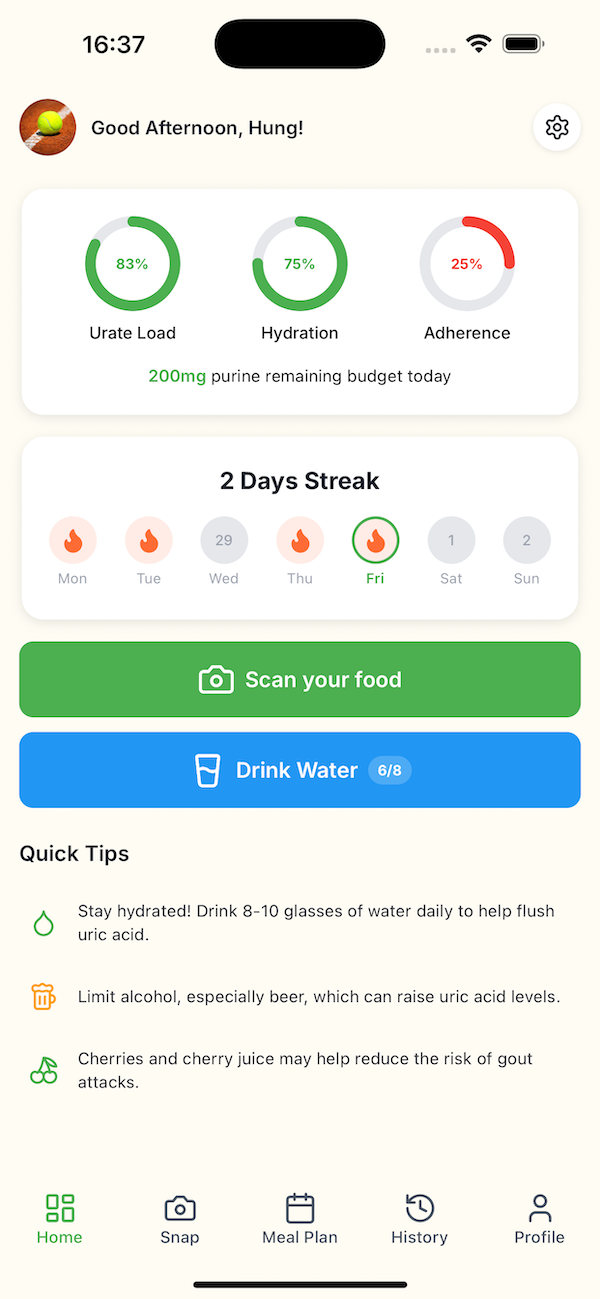
Managing gout doesn't have to be complicated. GoutSnap AI is a revolutionary mobile app that uses artificial intelligence to analyze your food in real-time and help you make better dietary choices.
Simply snap a photo of your meal, and our AI instantly identifies high-purine foods that could trigger gout attacks. Get personalized recommendations, track your diet history, and prevent flare-ups before they happen.
Key Features:
- 📸 Instant Food Analysis - Take a photo and get immediate purine content information
- 🍽️ Dietary Tracking - Monitor your daily purine intake effortlessly
- 💡 Smart Recommendations - Receive AI-powered suggestions for gout-friendly alternatives
- 📊 Health Insights - Track patterns and identify your personal triggers
There are a few mobile apps for health, diet and manage gout. However, a several thousand of users has concluded that GoutSnap AI is successfully managing their gout with the power of AI.