Controlling Gout in Adult Kidney Transplant Recipients | Docwire News
Gout After Kidney Transplant: Managing a Complex Condition
Gout, a painful form of inflammatory arthritis, poses unique challenges for individuals who have undergone kidney transplantation. The very factors designed to protect their new kidney can inadvertently increase the risk of gout, making careful management crucial.
Understanding the Link Between Kidney Transplants and Gout
Why are kidney transplant recipients more susceptible to gout? The answer lies in a combination of factors:
- Impaired Kidney Function: Even with a transplanted kidney, some level of chronic renal impairment often persists. This reduces the body's ability to effectively excrete uric acid, a waste product that, when present in high concentrations, forms crystals in the joints, leading to gout flares.
- Immunosuppressant Medications: These drugs are essential to prevent the body from rejecting the transplanted kidney. However, calcineurin inhibitors (like tacrolimus and cyclosporine) and diuretics, commonly used in post-transplant regimens, can further reduce uric acid excretion, exacerbating the risk of gout.
The Challenge of Treating Gout in Transplant Recipients
Treating gout in kidney transplant recipients requires a delicate balance. Standard urate-lowering therapies (ULTs) are often underutilized due to concerns about potential adverse effects and drug interactions with immunosuppressants. Traditional medications can impact kidney function, create further complications, and increase the possibility of rejection.
A Promising Treatment Option: Pegloticase
A recent study published in Clinical Transplantation explored the safety and efficacy of pegloticase, a potent urate-lowering medication, in kidney transplant recipients with uncontrolled gout. The open-label, phase 4 trial (PROTECT NCT04087720) involved 20 participants who had received kidney transplants at least a year prior to enrollment and were experiencing uncontrolled gout.
The study showed promising results. Participants experienced a significant decrease in gout flares over the six-month treatment period. While most participants experienced some adverse events, the majority were mild to moderate in intensity. The researchers found that pegloticase was generally well-tolerated in this patient population.
Practical Tips for Managing Gout After a Kidney Transplant
While the study offers hope, managing gout after a kidney transplant requires a multi-faceted approach. Here are some essential strategies:
Work Closely with Your Medical Team: Regular monitoring of uric acid levels and kidney function is crucial. Your transplant team and rheumatologist should collaborate to develop a personalized treatment plan.
Lifestyle Modifications: Dietary changes can play a significant role in managing gout. Focus on these recommendations:
- Limit Purine-Rich Foods: Reduce intake of red meat, organ meats (liver, kidneys), and certain seafood (anchovies, sardines, herring, mussels).
- Avoid Sugary Drinks: Fructose-sweetened beverages can increase uric acid production.
- Limit Alcohol Consumption: Especially beer and hard liquor.
- Stay Hydrated: Drinking plenty of water helps flush out uric acid.
Medication Management:
- Discuss All Medications: Inform your doctors about all medications and supplements you are taking to avoid potential drug interactions.
- Explore Alternative Urate-Lowering Therapies: If traditional ULTs are not suitable, discuss options like pegloticase with your doctor.
- Manage Gout Flares: Work with your doctor to develop a plan for managing acute gout flares, including appropriate pain relief options.
Monitor and Report Symptoms: Pay close attention to any signs of gout flares, such as joint pain, swelling, redness, and warmth. Report these symptoms to your doctor promptly.
By working closely with your medical team, adopting healthy lifestyle habits, and exploring appropriate treatment options, individuals who have undergone kidney transplantation can effectively manage gout and improve their quality of life.
Take Control of Your Gout with AI Technology
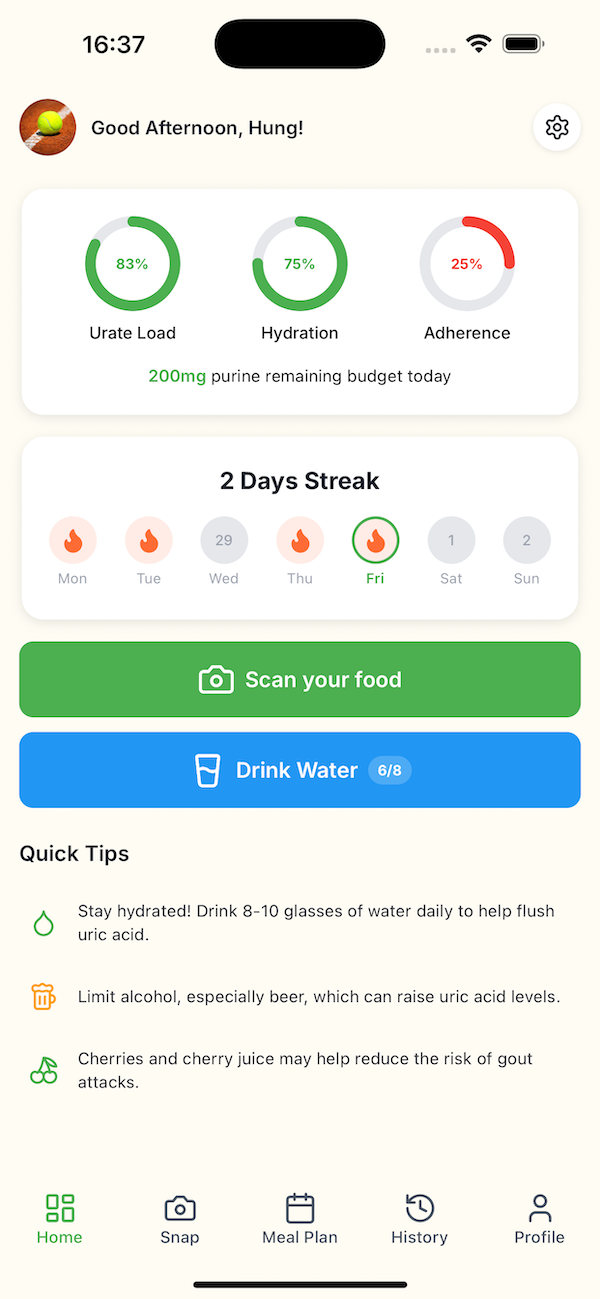
Managing gout doesn't have to be complicated. GoutSnap AI is a revolutionary mobile app that uses artificial intelligence to analyze your food in real-time and help you make better dietary choices.
Simply snap a photo of your meal, and our AI instantly identifies high-purine foods that could trigger gout attacks. Get personalized recommendations, track your diet history, and prevent flare-ups before they happen.
Key Features:
- 📸 Instant Food Analysis - Take a photo and get immediate purine content information
- 🍽️ Dietary Tracking - Monitor your daily purine intake effortlessly
- 💡 Smart Recommendations - Receive AI-powered suggestions for gout-friendly alternatives
- 📊 Health Insights - Track patterns and identify your personal triggers
There are a few mobile apps for health, diet and manage gout. However, a several thousand of users has concluded that GoutSnap AI is successfully managing their gout with the power of AI.