Can Keeping Uric Acid Levels Down Lead to Stronger Bones in People with Gout?
Gout and Bone Health: Could Lowering Uric Acid Protect Your Bones?
Gout, a painful form of inflammatory arthritis, is known for its sudden and intense attacks, often affecting the big toe. But did you know that managing your gout by lowering uric acid levels might also benefit your bone health? Recent research suggests a link between keeping uric acid in check and a reduced risk of fractures.
The Link Between Uric Acid and Bone Health
If you have gout, your doctor has likely discussed treatments aimed at lowering uric acid levels in your blood. A common medication prescribed for this purpose is allopurinol. These treatments work by reducing the formation of uric acid or helping your body eliminate it more effectively.
Now, a new study highlights a potential added benefit: lower uric acid levels may also contribute to stronger bones and a lower risk of fractures.
The Research: Lower Uric Acid, Lower Fracture Risk
Researchers conducted a study involving over 28,000 people with gout to investigate the connection between uric acid levels and fracture risk. Using advanced statistical methods, they analyzed data to project the likelihood of hip fractures within five years based on whether individuals reached a target serum urate level (the amount of uric acid in the blood).
The results were encouraging. The study found that people who successfully lowered their uric acid levels to the target range with medication had a significantly lower risk of hip fractures compared to those who did not reach the target.
The study also showed similar trends for other types of fractures, including:
- Composite Fracture: A combination of different types of fractures.
- Major Osteoporotic Fracture: Fractures commonly associated with osteoporosis, such as hip, spine, wrist, and shoulder fractures.
- Vertebral Fracture: Fractures of the vertebrae in the spine.
- Non-Vertebral Fracture: Fractures occurring in bones other than the vertebrae.
These findings indicate that actively managing uric acid levels through urate-lowering therapy may offer a protective effect against a variety of fractures.
Why Might Lowering Uric Acid Help Bones?
While the exact mechanisms are still being investigated, researchers have proposed several theories to explain how uric-lowering treatment could benefit bone health:
- Reduced Oxidative Stress and Inflammation: High levels of uric acid can trigger oxidative stress and excessive inflammation throughout the body. This inflammation may interfere with the formation of new bone tissue, weakening bones over time.
- Impact on Vitamin D and Parathyroid Hormone: Elevated uric acid levels might affect the levels of vitamin D or parathyroid hormone, both of which play crucial roles in maintaining bone health. Imbalances in these hormones can negatively impact bone density and increase the risk of fractures.
What This Means for People with Gout
Understanding this potential connection between uric acid and bone health is crucial for anyone living with gout. It reinforces the importance of working closely with your doctor to manage your uric acid levels effectively. It's not just about preventing gout attacks; it's also about potentially protecting your bones and reducing your risk of fractures.
Practical Steps You Can Take
Here are some practical steps you can take to manage your uric acid levels and promote bone health:
- Follow Your Doctor's Treatment Plan: Adhere to your prescribed medication regimen, including urate-lowering therapies like allopurinol, as directed by your doctor.
- Regular Monitoring: Get your uric acid levels checked regularly to ensure they are within the target range recommended by your healthcare provider.
- Dietary Modifications: Limit purine-rich foods like red meat, organ meats, and certain seafood, which can contribute to higher uric acid levels.
- Stay Hydrated: Drink plenty of water to help your kidneys flush out excess uric acid.
- Limit Alcohol Consumption: Alcohol, especially beer, can raise uric acid levels.
- Maintain a Healthy Weight: Obesity is associated with higher uric acid levels and an increased risk of gout.
- Vitamin D and Calcium: Discuss with your doctor whether you need vitamin D and calcium supplementation to support bone health.
- Weight-Bearing Exercise: Engage in regular weight-bearing exercises, such as walking, jogging, or weightlifting, to help strengthen your bones.
[Image of person holding foot in pain from the original article]
Take Control of Your Gout with AI Technology
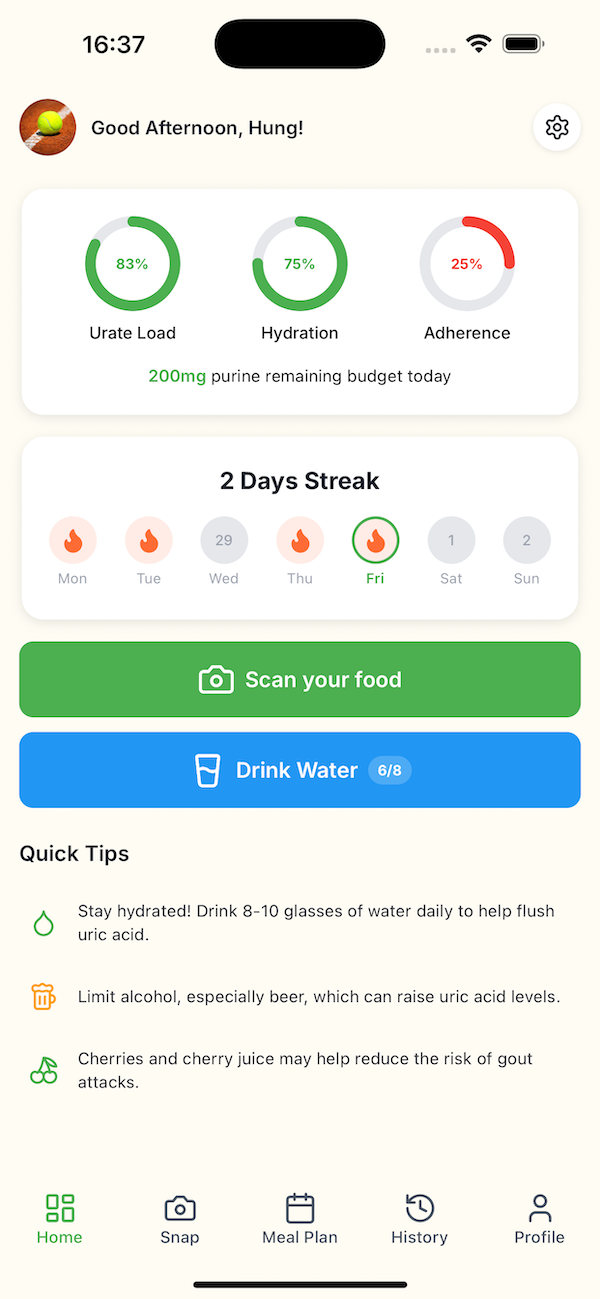
Managing gout doesn't have to be complicated. GoutSnap AI is a revolutionary mobile app that uses artificial intelligence to analyze your food in real-time and help you make better dietary choices.
Simply snap a photo of your meal, and our AI instantly identifies high-purine foods that could trigger gout attacks. Get personalized recommendations, track your diet history, and prevent flare-ups before they happen.
Key Features:
- 📸 Instant Food Analysis - Take a photo and get immediate purine content information
- 🍽️ Dietary Tracking - Monitor your daily purine intake effortlessly
- 💡 Smart Recommendations - Receive AI-powered suggestions for gout-friendly alternatives
- 📊 Health Insights - Track patterns and identify your personal triggers
There are a few mobile apps for health, diet and manage gout. However, a several thousand of users has concluded that GoutSnap AI is successfully managing their gout with the power of AI.