Atom claims phase 3 win shows gout drug can beat competition in efficacy, safety
Promising New Gout Drug Shows Potential for Superior Efficacy and Safety
Gout sufferers may soon have a new treatment option. Atom Therapeutics has announced positive results from a Phase 2b/3 clinical trial, suggesting their investigational gout medication could outperform existing therapies in both effectiveness and safety.
Understanding Gout: A Painful Reality
Gout is a common and intensely painful form of inflammatory arthritis. It occurs when uric acid builds up in the body, forming sharp crystals in the joints. This buildup, often starting in the big toe, leads to sudden attacks of pain, redness, swelling, and tenderness.
The Role of Uric Acid
Uric acid is a natural byproduct of the breakdown of purines, substances found in many foods and also produced by the body. Normally, uric acid dissolves in the blood and passes through the kidneys into the urine. However, when the body produces too much uric acid or the kidneys don't eliminate enough, hyperuricemia (high uric acid levels) develops, increasing the risk of gout.
Current Gout Treatments: A Need for Improvement
Current treatments for gout primarily focus on either reducing inflammation during acute attacks or lowering uric acid levels to prevent future flares. Common medications include:
- NSAIDs (Nonsteroidal Anti-inflammatory Drugs): Used to relieve pain and inflammation during gout attacks.
- Colchicine: Another anti-inflammatory drug used to treat acute gout flares and sometimes prevent them.
- Allopurinol: A Urate-Lowering Therapy (ULT) that reduces the production of uric acid.
- Febuxostat: Another ULT that works similarly to allopurinol.
- Pegloticase (Krystexxa): An injectable medication used in severe cases of gout that haven't responded to other treatments. It breaks down uric acid.
While these medications can be effective, they often come with side effects and may not work for everyone. Allopurinol, for example, is a common first-line treatment, but some individuals experience intolerance or insufficient uric acid lowering. Krystexxa, while effective in difficult-to-treat cases, requires intravenous infusions and can be associated with infusion reactions.
Atom's New Gout Drug: A Potential Game Changer
Atom Therapeutics' investigational drug is a URAT1 inhibitor. URAT1 (Urate transporter 1) is a protein in the kidneys responsible for reabsorbing uric acid back into the bloodstream. By inhibiting URAT1, the drug aims to increase uric acid excretion and lower uric acid levels in the body.
The Phase 2b/3 study results, which the company is touting, suggest that their URAT1 inhibitor may offer:
- Improved Efficacy: Potentially more effective at lowering uric acid levels compared to existing treatments.
- Enhanced Safety: A potentially safer profile with fewer side effects.
While full details of the study haven't been released, Atom Therapeutics claims the data supports the drug's potential to be a best-in-class treatment for gout. Further information will likely be presented at an upcoming medical conference or published in a peer-reviewed journal.
Managing Gout: Lifestyle and Dietary Strategies
Alongside medication, lifestyle and dietary changes play a crucial role in managing gout. Here are some practical tips:
- Limit Purine-Rich Foods: Reduce intake of foods high in purines, such as red meat, organ meats (liver, kidneys), and certain seafood (sardines, anchovies).
- Avoid Sugary Drinks: Limit or avoid sugar-sweetened beverages, especially those containing high-fructose corn syrup. These drinks can increase uric acid production.
- Moderate Alcohol Consumption: Alcohol, particularly beer, can also raise uric acid levels. If you drink alcohol, do so in moderation.
- Stay Hydrated: Drink plenty of water to help flush uric acid out of the body.
- Maintain a Healthy Weight: Obesity increases the risk of gout. Losing weight, if you are overweight, can help lower uric acid levels.
- Eat Cherries: Some studies suggest that cherries and cherry extract may help lower uric acid levels and reduce gout flares.
- Incorporate Coffee: Observational studies have linked coffee consumption with a lower risk of gout.
It's important to remember that managing gout is often a long-term process that requires a combination of medication, lifestyle modifications, and regular monitoring by a healthcare professional. The emergence of promising new drugs like Atom's URAT1 inhibitor offers hope for improved treatment options and better quality of life for people living with gout.
Take Control of Your Gout with AI Technology
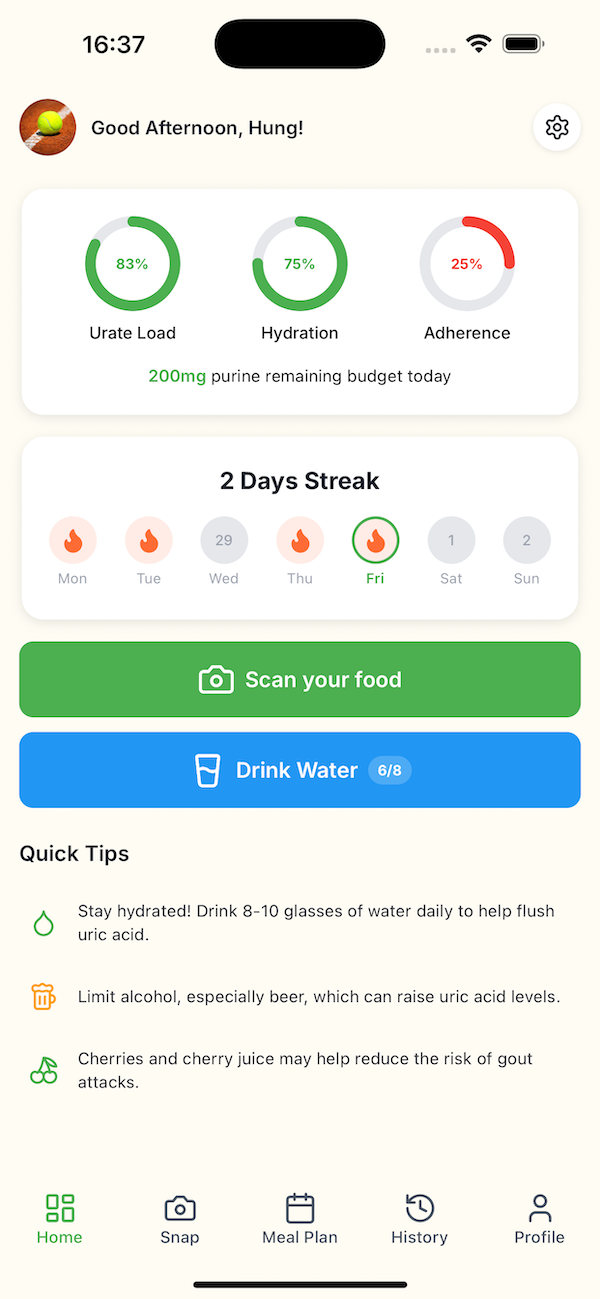
Managing gout doesn't have to be complicated. GoutSnap AI is a revolutionary mobile app that uses artificial intelligence to analyze your food in real-time and help you make better dietary choices.
Simply snap a photo of your meal, and our AI instantly identifies high-purine foods that could trigger gout attacks. Get personalized recommendations, track your diet history, and prevent flare-ups before they happen.
Key Features:
- 📸 Instant Food Analysis - Take a photo and get immediate purine content information
- 🍽️ Dietary Tracking - Monitor your daily purine intake effortlessly
- 💡 Smart Recommendations - Receive AI-powered suggestions for gout-friendly alternatives
- 📊 Health Insights - Track patterns and identify your personal triggers
There are a few mobile apps for health, diet and manage gout. However, a several thousand of users has concluded that GoutSnap AI is successfully managing their gout with the power of AI.