Allopurinol Noninferior to Febuxostat in the Treatment of Gout
Gout Treatment: Allopurinol Still a Solid Choice, Study Suggests
Gout, a painful form of inflammatory arthritis, affects millions worldwide. It’s caused by a buildup of uric acid crystals in the joints, leading to sudden and severe attacks of pain, redness, and swelling. Managing gout effectively requires lowering uric acid levels in the blood. Two common medications used for this purpose are allopurinol and febuxostat. A recent study sheds light on their comparative effectiveness.
Understanding Gout and Uric Acid
Gout occurs when uric acid, a natural waste product from the breakdown of purines (found in many foods and also produced by the body), accumulates in the blood. When levels become too high (hyperuricemia), uric acid can form crystals that deposit in joints and surrounding tissues.
Factors that increase your risk of gout include:
- Diet: High intake of purine-rich foods like red meat, organ meats, and seafood, as well as sugary drinks and alcohol (especially beer).
- Obesity: Excess weight increases uric acid production.
- Medical Conditions: Kidney disease, diabetes, high blood pressure, and certain enzyme deficiencies.
- Medications: Diuretics (water pills) can increase uric acid levels.
- Family History: Gout tends to run in families.
Allopurinol vs. Febuxostat: What the Study Shows
[Image of a pill bottle]
A recent retrospective cohort study compared the effectiveness of allopurinol and febuxostat in lowering uric acid levels in people with gout. Researchers analyzed electronic health records of patients with gout who were prescribed either allopurinol or febuxostat between 2015 and 2020. The primary goal was to see how many patients in each group achieved a target serum urate (sUA) level of less than 6.0 mg/dL.
The study found that allopurinol was non-inferior to febuxostat in achieving the target sUA level. This means that allopurinol was at least as effective as febuxostat in lowering uric acid.
Why This Matters
Allopurinol has been a mainstay in gout treatment for decades. It's generally more affordable than febuxostat, making it a more accessible option for many people. This study reinforces the idea that allopurinol remains a valuable and effective treatment option for gout. Febuxostat is often prescribed to those who cannot tolerate allopurinol or for whom allopurinol is ineffective.
Practical Tips for Managing Gout
While medication is crucial for managing gout, lifestyle changes can significantly impact uric acid levels and reduce the frequency and severity of gout attacks. Here are some actionable tips:
Dietary Changes
- Limit Purine-Rich Foods: Reduce your intake of red meat, organ meats (liver, kidney), and certain seafood (anchovies, sardines, herring, mussels, scallops).
- Avoid Sugary Drinks: Limit or avoid sugar-sweetened beverages, especially those containing high-fructose corn syrup.
- Moderate Alcohol Consumption: Beer is particularly high in purines. Limit alcohol intake, especially beer. Wine may be consumed in moderation.
- Stay Hydrated: Drink plenty of water to help flush uric acid from your system.
- Choose Low-Fat Dairy: Studies suggest that low-fat dairy products may help lower uric acid levels.
- Eat Cherries: Cherries and cherry juice have been shown to have anti-inflammatory properties and may help lower uric acid levels.
Lifestyle Modifications
- Maintain a Healthy Weight: Losing weight can help reduce uric acid production.
- Exercise Regularly: Regular physical activity can help improve overall health and reduce the risk of gout attacks. Avoid strenuous exercise during a gout flare.
- Manage Stress: Stress can trigger gout attacks. Find healthy ways to manage stress, such as yoga, meditation, or spending time in nature.
Working with Your Doctor
- Regular Monitoring: Work with your doctor to monitor your uric acid levels and adjust your medication as needed.
- Medication Adherence: Take your medication as prescribed by your doctor. Do not stop taking your medication without consulting your doctor.
- Discuss Potential Interactions: Be sure to tell your doctor about all medications and supplements you are taking to avoid potential interactions.
Take Control of Your Gout with AI Technology
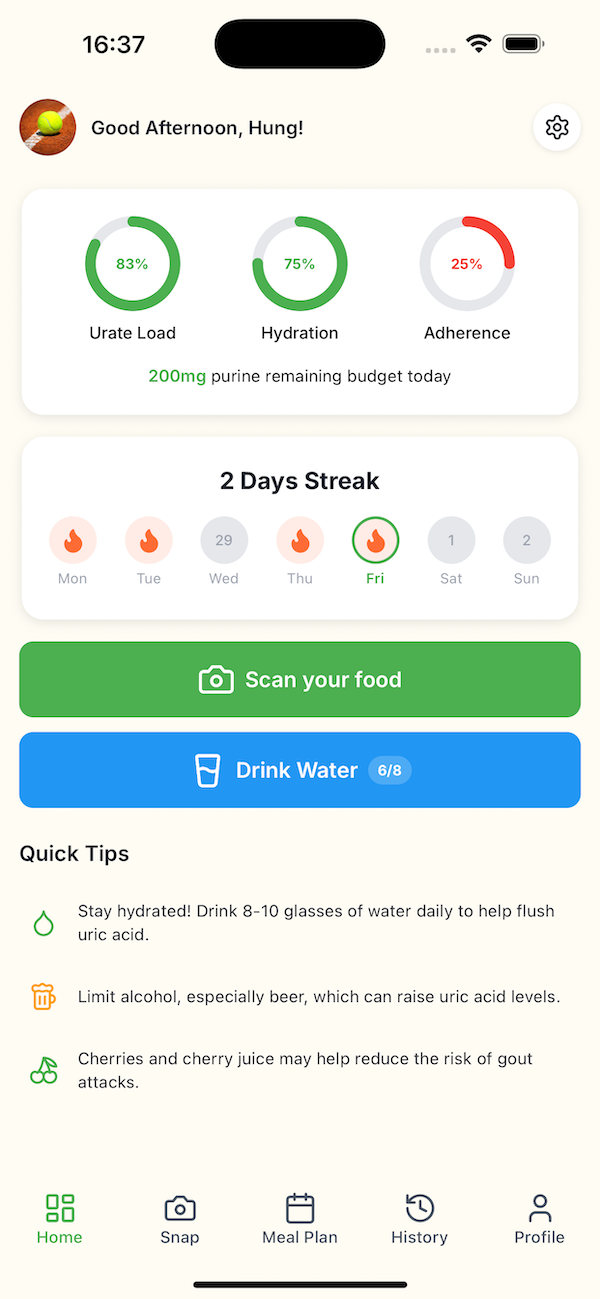
Managing gout doesn't have to be complicated. GoutSnap AI is a revolutionary mobile app that uses artificial intelligence to analyze your food in real-time and help you make better dietary choices.
Simply snap a photo of your meal, and our AI instantly identifies high-purine foods that could trigger gout attacks. Get personalized recommendations, track your diet history, and prevent flare-ups before they happen.
Key Features:
- 📸 Instant Food Analysis - Take a photo and get immediate purine content information
- 🍽️ Dietary Tracking - Monitor your daily purine intake effortlessly
- 💡 Smart Recommendations - Receive AI-powered suggestions for gout-friendly alternatives
- 📊 Health Insights - Track patterns and identify your personal triggers
There are a few mobile apps for health, diet and manage gout. However, a several thousand of users has concluded that GoutSnap AI is successfully managing their gout with the power of AI.