Access Anytime Anywhere | Cleveland Clinic
Understanding Gout and Managing it Through Diet
Gout is a painful form of inflammatory arthritis that develops when uric acid builds up and forms crystals in your joints. These crystals can trigger sudden, intense pain, swelling, redness, and tenderness in the affected joint, most often the big toe. While medication is a key part of gout management, dietary changes can play a significant role in preventing flare-ups and improving your overall well-being.
What Causes Gout?
Uric acid is a waste product created when your body breaks down purines, substances naturally found in your body and in many foods. Normally, uric acid dissolves in your blood and passes through your kidneys into urine. However, if your body produces too much uric acid or your kidneys don't eliminate enough, it can build up and form sharp, needle-like crystals in a joint or surrounding tissue, causing gout.
The Role of Diet in Gout Management
While dietary changes alone might not completely eliminate gout, they can help lower uric acid levels and reduce the frequency and severity of gout attacks. The key is to focus on a balanced, healthy diet that limits purine-rich foods and promotes overall health.
Dietary Recommendations for Gout
Here's a guide to dietary changes that can help manage gout:
Limit Purine-Rich Foods:
- Red Meat: Beef, lamb, and pork are high in purines. Reduce your consumption and opt for leaner protein sources.
- Organ Meats: Liver, kidneys, and sweetbreads are exceptionally high in purines and should be avoided.
- Seafood: Certain types of seafood, like anchovies, sardines, herring, mussels, scallops, and trout, are high in purines. Moderate your intake.
Moderate Alcohol Consumption: Alcohol, especially beer, can increase uric acid production and decrease its elimination. Limit your alcohol intake to one drink per day for women and two drinks per day for men, or consider abstaining altogether during flare-ups.
Reduce Sugary Drinks and Foods: Fructose, a type of sugar found in many sweetened beverages and processed foods, can increase uric acid levels. Limit your intake of soda, fruit juice, and sugary snacks.
Include Low-Purine Foods:
- Fruits and Vegetables: Most fruits and vegetables are low in purines and can be enjoyed liberally. Cherries, in particular, have been shown to have anti-inflammatory properties that may help reduce gout flares.
- Whole Grains: Oats, brown rice, and other whole grains are good sources of carbohydrates and fiber and are low in purines.
- Low-Fat Dairy: Studies suggest that low-fat dairy products, like milk and yogurt, may help lower uric acid levels.
Stay Hydrated: Drinking plenty of water helps your kidneys flush out uric acid. Aim for at least eight glasses of water per day.
Additional Tips for Managing Gout
Maintain a Healthy Weight: Being overweight or obese increases your risk of developing gout. Losing weight gradually can help lower uric acid levels.
Talk to Your Doctor: Dietary changes are just one aspect of gout management. It's essential to work with your doctor to develop a comprehensive treatment plan that may include medication to lower uric acid levels.
Read Food Labels Carefully: Pay attention to the ingredients and nutritional information on food labels to make informed choices about your diet.

Consider a Registered Dietitian: A registered dietitian can help you develop a personalized meal plan that meets your individual needs and preferences while managing your gout symptoms.
Take Control of Your Gout with AI Technology
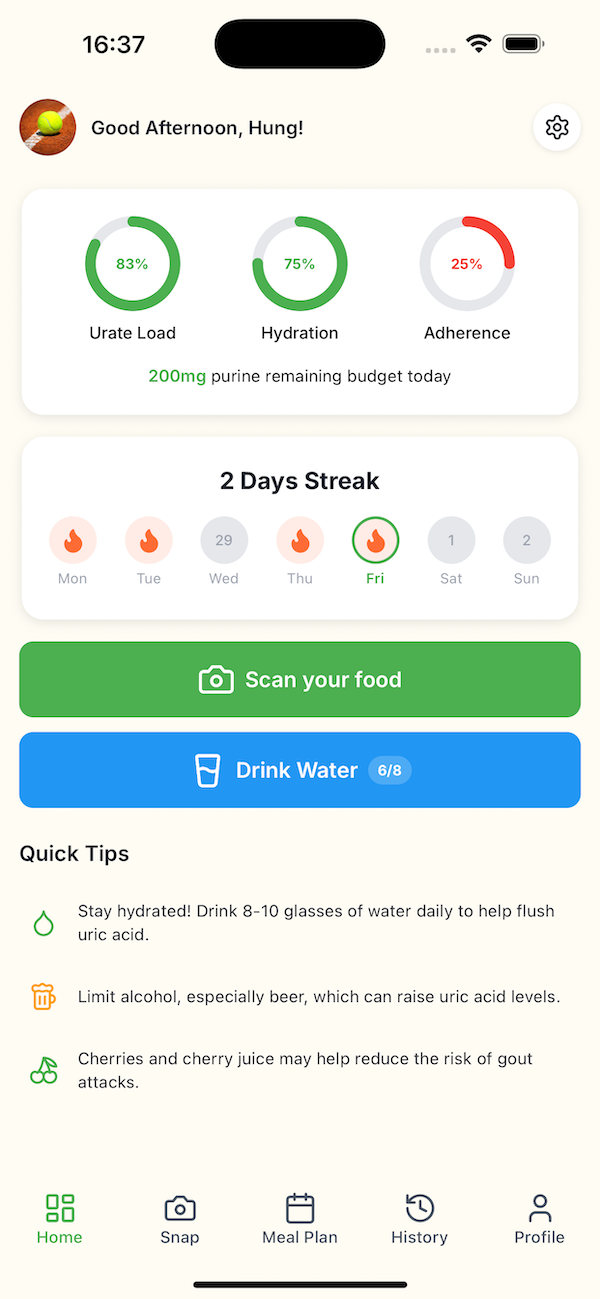
Managing gout doesn't have to be complicated. GoutSnap AI is a revolutionary mobile app that uses artificial intelligence to analyze your food in real-time and help you make better dietary choices.
Simply snap a photo of your meal, and our AI instantly identifies high-purine foods that could trigger gout attacks. Get personalized recommendations, track your diet history, and prevent flare-ups before they happen.
Key Features:
- 📸 Instant Food Analysis - Take a photo and get immediate purine content information
- 🍽️ Dietary Tracking - Monitor your daily purine intake effortlessly
- 💡 Smart Recommendations - Receive AI-powered suggestions for gout-friendly alternatives
- 📊 Health Insights - Track patterns and identify your personal triggers
There are a few mobile apps for health, diet and manage gout. However, a several thousand of users has concluded that GoutSnap AI is successfully managing their gout with the power of AI.