Study: CKD Not Worsened With Gout Treatment
Gout Treatment Safe for Kidneys: New Study Offers Reassurance
For individuals battling both gout and chronic kidney disease (CKD), a new study brings encouraging news: urate-lowering therapy (ULT), the cornerstone of gout management, does not appear to worsen kidney function. This finding, published by Wei and colleagues, directly challenges concerns that have led some doctors to reduce or halt ULT in patients with CKD, potentially complicating the management of both conditions.

Understanding Gout and CKD
Gout is a painful form of inflammatory arthritis caused by a buildup of uric acid crystals in the joints. This buildup, known as hyperuricemia, occurs when the body either produces too much uric acid or doesn't eliminate enough. The telltale sign of gout is a sudden, excruciating pain, often in the big toe, accompanied by redness, swelling, and warmth.
Chronic kidney disease (CKD) is a gradual loss of kidney function. Damaged kidneys struggle to filter waste and excess fluid from the blood, leading to a buildup of toxins in the body. CKD can be caused by various factors, including diabetes, high blood pressure, and glomerulonephritis (inflammation of the kidney's filtering units).
Many people with gout also have CKD, making treatment decisions more complex.
The Study's Key Findings
The recent study from Great Britain addressed a long-standing concern about the safety of ULT in patients with CKD. Researchers found no evidence that ULT, primarily allopurinol, worsened kidney function in this vulnerable population.
This finding is significant because some clinicians, influenced by anecdotal reports and concerns about potential risks like allopurinol hypersensitivity syndrome (a rare but serious allergic reaction), have been hesitant to aggressively lower uric acid levels in gout patients with CKD. This reluctance can lead to poorly controlled gout and continued joint damage.
Why This Matters for Gout Patients with CKD
The study provides valuable reassurance for both patients and doctors. It suggests that effectively managing gout with ULT is safe and should not be avoided out of fear of harming the kidneys. Achieving target serum urate levels (typically below 6 mg/dL) is crucial for preventing gout flares and long-term joint damage, regardless of kidney function.
Practical Tips for Managing Gout and CKD
If you have both gout and CKD, here's what you need to know:
- Talk to your doctor: Discuss your concerns about ULT and its potential impact on your kidney health. Share the findings of this new study with your physician.
- Monitor your uric acid levels: Regular blood tests are essential to ensure your ULT is effective in lowering your uric acid levels to the target range.
- Optimize your ULT dosage: Your doctor may need to adjust your ULT dosage to achieve optimal uric acid control.
- Consider lifestyle modifications: Dietary changes can play a significant role in managing gout.
- Limit purine-rich foods: These include red meat, organ meats, and certain seafood (like shellfish and anchovies).
- Reduce fructose intake: Avoid sugary drinks and processed foods high in fructose.
- Stay hydrated: Drinking plenty of water helps flush out uric acid.
- Limit alcohol: Alcohol, especially beer, can increase uric acid levels.
- Manage other health conditions: Effectively controlling conditions like diabetes and high blood pressure is crucial for slowing the progression of CKD.
- Medication Management: Many gout and CKD patients are on multiple medications. Ensure your doctor is aware of all medications you are taking to prevent drug interactions.
Remember, effectively managing gout and CKD requires a collaborative approach between you and your healthcare team. Don't hesitate to ask questions and express your concerns.
Take Control of Your Gout with AI Technology
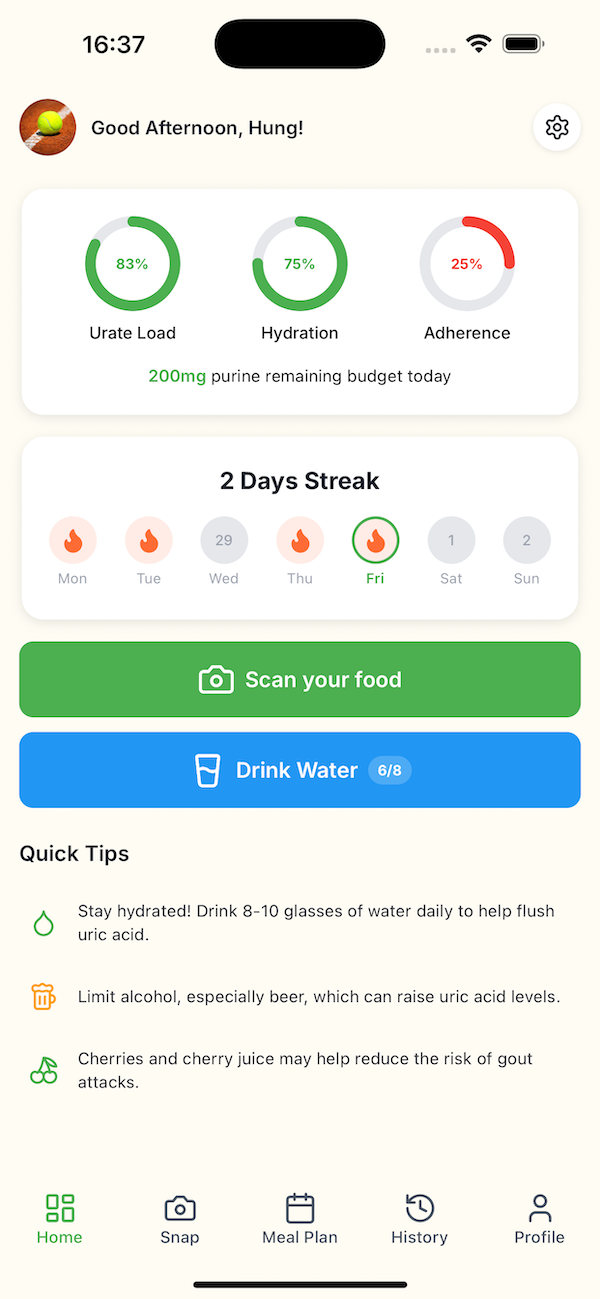
Managing gout doesn't have to be complicated. GoutSnap AI is a revolutionary mobile app that uses artificial intelligence to analyze your food in real-time and help you make better dietary choices.
Simply snap a photo of your meal, and our AI instantly identifies high-purine foods that could trigger gout attacks. Get personalized recommendations, track your diet history, and prevent flare-ups before they happen.
Key Features:
- 📸 Instant Food Analysis - Take a photo and get immediate purine content information
- 🍽️ Dietary Tracking - Monitor your daily purine intake effortlessly
- 💡 Smart Recommendations - Receive AI-powered suggestions for gout-friendly alternatives
- 📊 Health Insights - Track patterns and identify your personal triggers
There are a few mobile apps for health, diet and manage gout. However, a several thousand of users has concluded that GoutSnap AI is successfully managing their gout with the power of AI.