Shanton Receives Fast Track Designation from US FDA for Refractory Gout Program
Hope on the Horizon for Gout Sufferers: New Treatment Receives FDA Fast Track
Gout, a painful form of inflammatory arthritis, affects millions worldwide. Characterized by sudden, severe attacks of pain, redness, and swelling in the joints (often the big toe), gout can significantly impact quality of life. While standard treatments are effective for many, some individuals develop refractory gout, a more challenging condition. Fortunately, new hope is emerging in the form of innovative therapies currently under development.
Understanding Gout and Its Challenges
Gout is caused by an excess of uric acid in the blood, a condition known as hyperuricemia. Uric acid is a natural waste product from the breakdown of purines, substances found in our bodies and in many foods. When uric acid levels are too high, crystals can form in the joints, triggering inflammation and intense pain.
While medications like allopurinol and febuxostat, known as urate-lowering therapies (ULTs), effectively reduce uric acid levels for most individuals, some people don't respond adequately to these treatments or experience intolerable side effects. This is where the term "refractory gout" comes into play. Refractory gout refers to gout that doesn't respond to standard treatments, leaving patients with persistent pain and inflammation and potential joint damage.
Who is Affected by Refractory Gout?
Several factors can contribute to refractory gout, including:
- Underlying kidney disease: Impaired kidney function can hinder the body's ability to eliminate uric acid.
- Medication interactions: Certain medications can interfere with uric acid metabolism or excretion.
- Dietary factors: While diet alone rarely causes gout, a diet high in purines (found in red meat, organ meats, and certain seafood) can exacerbate the condition.
- Genetic predisposition: Some individuals may be genetically predisposed to higher uric acid levels or a reduced response to conventional treatments.
Fast Track Designation: A Promising Step Forward
Recently, Shanton, a pharmaceutical company, announced that their investigational compound, SAP-001, has received Fast Track designation from the U.S. Food and Drug Administration (FDA) for their refractory gout program.

Fast Track designation is granted to drugs that show promise in treating serious conditions and addressing unmet medical needs. This designation allows for more frequent interactions with the FDA during the drug development process and may lead to accelerated approval. This is encouraging news for those struggling with refractory gout, as it suggests the potential for a new treatment option to become available sooner. According to Dr. Wenfeng Miao, Shanton's CMO, this designation offers "the opportunity for faster regulatory reviews... to speed up the availability of a much-needed solution for gout patients who do not respond to or cannot tolerate Standard-of-Care treatment."
Managing Gout: Diet and Lifestyle Strategies
While new treatments are on the horizon, lifestyle modifications remain a cornerstone of gout management. Here are some practical tips to help manage your gout:
Dietary Changes:
- Limit Purine-Rich Foods: Reduce your intake of red meat, organ meats (liver, kidneys), and certain seafood (sardines, anchovies, herring).
- Moderate Alcohol Consumption: Alcohol, especially beer, can increase uric acid production. Limit alcohol intake or avoid it altogether.
- Stay Hydrated: Drinking plenty of water helps flush out uric acid. Aim for at least eight glasses of water per day.
- Choose Low-Fat Dairy: Studies suggest that low-fat dairy products may help lower uric acid levels.
- Incorporate Cherries: Some research suggests that cherries and cherry extract may have anti-inflammatory properties and help reduce gout flares.
Lifestyle Adjustments:
- Maintain a Healthy Weight: Obesity is associated with higher uric acid levels. Losing weight can help lower uric acid and reduce gout attacks.
- Regular Exercise: Regular physical activity can help maintain a healthy weight and improve overall health.
- Manage Stress: Stress can trigger gout flares. Practice stress-reducing techniques such as yoga, meditation, or deep breathing exercises.
Work Closely with Your Doctor
It's important to work closely with your doctor to develop a personalized treatment plan for gout. This may include medications to lower uric acid levels and lifestyle modifications to manage symptoms. Regular monitoring of uric acid levels is essential to ensure that your treatment is effective. If you are experiencing persistent gout symptoms despite standard treatment, talk to your doctor about whether you might be a candidate for investigational therapies.
Take Control of Your Gout with AI Technology
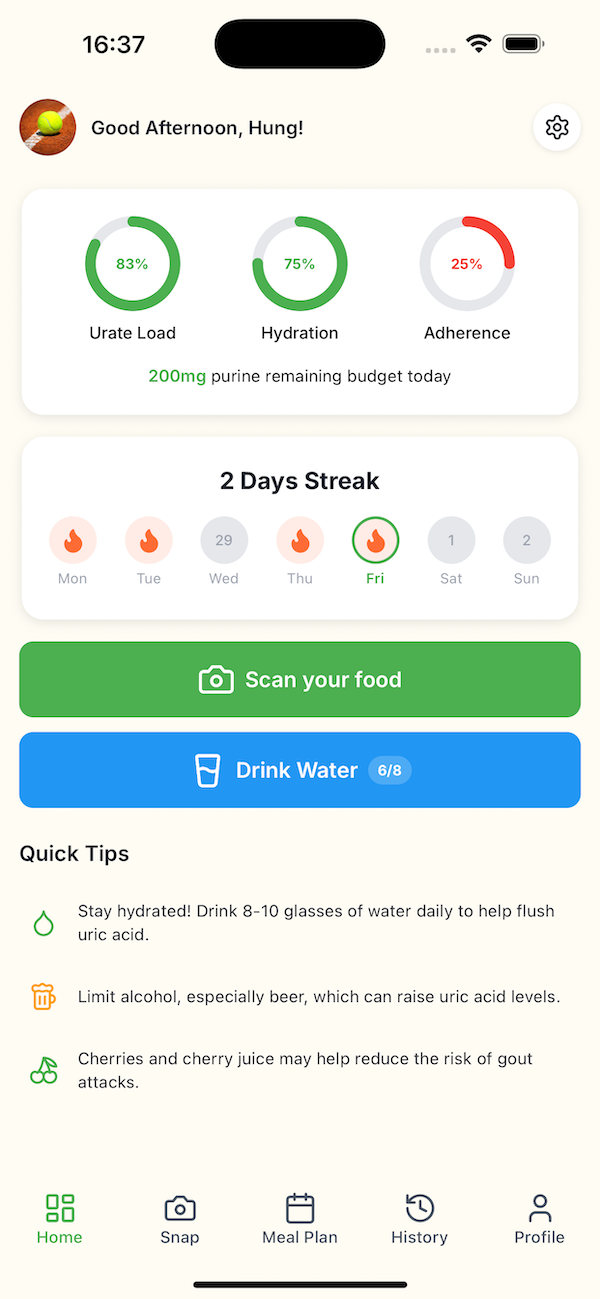
Managing gout doesn't have to be complicated. GoutSnap AI is a revolutionary mobile app that uses artificial intelligence to analyze your food in real-time and help you make better dietary choices.
Simply snap a photo of your meal, and our AI instantly identifies high-purine foods that could trigger gout attacks. Get personalized recommendations, track your diet history, and prevent flare-ups before they happen.
Key Features:
- 📸 Instant Food Analysis - Take a photo and get immediate purine content information
- 🍽️ Dietary Tracking - Monitor your daily purine intake effortlessly
- 💡 Smart Recommendations - Receive AI-powered suggestions for gout-friendly alternatives
- 📊 Health Insights - Track patterns and identify your personal triggers
There are a few mobile apps for health, diet and manage gout. However, a several thousand of users has concluded that GoutSnap AI is successfully managing their gout with the power of AI.