Review Discusses Common Missteps in Treating Patients With Gout and CKD
Gout and Kidney Disease: Avoiding Common Treatment Mistakes
Gout, a painful form of inflammatory arthritis, can be particularly challenging to manage in individuals with chronic kidney disease (CKD). Unfortunately, people with both conditions are often excluded from clinical trials, leading to gaps in our understanding of optimal treatment strategies. This can result in inconsistencies in how gout is managed in this vulnerable population.
Based on a recent review article in Kidney360, this article highlights some common pitfalls in treating gout in patients with CKD and offers practical guidance for effective management.
Understanding the Connection: Gout and CKD
Gout is caused by a buildup of uric acid in the blood (hyperuricemia). This excess uric acid can form crystals that deposit in joints, causing sudden and severe pain, redness, and swelling – a gout flare. CKD impairs the kidneys' ability to filter uric acid from the blood, increasing the risk of gout. Conversely, chronic inflammation from gout can also contribute to kidney damage, creating a complex and potentially harmful cycle.
Common Treatment Mistakes to Avoid
1. Incorrect Colchicine Dosage
Colchicine is often used to treat acute gout flares and for prophylaxis (prevention of flares). However, in patients with CKD, the kidneys' ability to eliminate colchicine is reduced. This means the drug can build up in the body, increasing the risk of side effects, some of which can be serious.
Actionable Advice: Always adjust the colchicine dose based on kidney function (glomerular filtration rate or GFR) as determined by your doctor. Be aware of potential drug interactions, as certain medications can further increase colchicine levels. Your doctor and pharmacist are your best resources for this assessment.
2. Limiting Allopurinol Dose Based on Kidney Function (Unnecessarily)
Allopurinol is a urate-lowering therapy (ULT) that reduces uric acid production. Some clinicians are hesitant to use higher doses of allopurinol in patients with CKD, fearing adverse events. While starting with a lower dose is generally recommended, rigidly adhering to a low maximum dose, regardless of the patient’s serum urate level, can lead to undertreatment and continued gout flares.
Actionable Advice: The goal of ULT is to lower serum urate levels to a target of <6 mg/dL. Work with your doctor to carefully titrate (gradually increase) the allopurinol dose while closely monitoring kidney function and side effects. Reaching the target urate level safely is key to preventing long-term gout complications. Regular blood tests are essential during this process.
3. Discontinuing Urate-Lowering Therapy During a Gout Flare
It's a common misconception that ULT should be stopped during a gout flare. In fact, interrupting ULT can actually worsen the flare or trigger future flares. ULT helps to dissolve existing uric acid crystals over time. Stopping treatment allows uric acid levels to rise again, destabilizing the crystals and potentially provoking further inflammation.
Actionable Advice: Continue taking your urate-lowering medication, such as allopurinol, even during a gout flare. Your doctor may prescribe additional medications, like colchicine or corticosteroids, to manage the flare while your ULT continues to work in the long term.
Prophylaxis and Treatment of Gout Flare
Effective gout management involves both treating acute flares and preventing future attacks. For flare treatment, consider the adjusted doses of colchicine or other appropriate medications based on your kidney function, as recommended by your doctor. For prophylaxis, ULT is the cornerstone of management. Remember, lowering serum urate to target levels is essential for preventing long-term complications.

Take Control of Your Gout with AI Technology
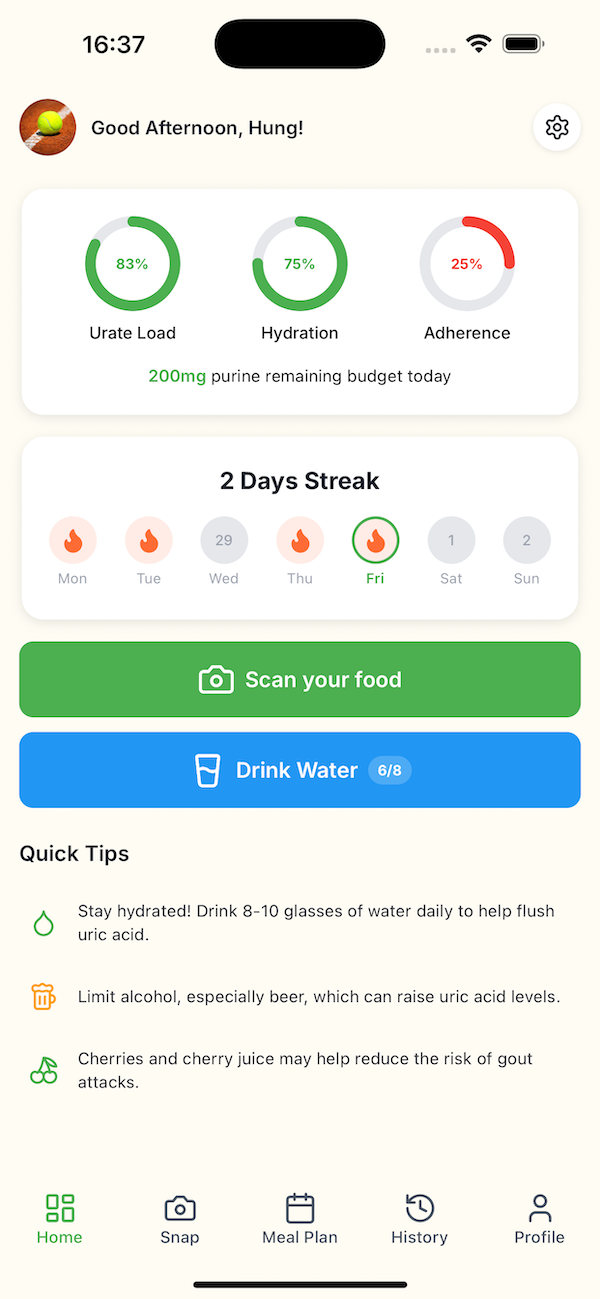
Managing gout doesn't have to be complicated. GoutSnap AI is a revolutionary mobile app that uses artificial intelligence to analyze your food in real-time and help you make better dietary choices.
Simply snap a photo of your meal, and our AI instantly identifies high-purine foods that could trigger gout attacks. Get personalized recommendations, track your diet history, and prevent flare-ups before they happen.
Key Features:
- 📸 Instant Food Analysis - Take a photo and get immediate purine content information
- 🍽️ Dietary Tracking - Monitor your daily purine intake effortlessly
- 💡 Smart Recommendations - Receive AI-powered suggestions for gout-friendly alternatives
- 📊 Health Insights - Track patterns and identify your personal triggers
There are a few mobile apps for health, diet and manage gout. However, a several thousand of users has concluded that GoutSnap AI is successfully managing their gout with the power of AI.