Gout Remission Achievable With Pegloticase-Induced Urate-Lowering Therapy | Docwire News
Gout Remission: A Promising Path with Intensive Urate-Lowering Therapy
Gout, a painful and debilitating form of inflammatory arthritis, can significantly impact your quality of life. Characterized by sudden, severe attacks of pain, swelling, redness, and tenderness in the joints – most often the big toe – gout arises from the buildup of uric acid crystals in your joints and surrounding tissues. While living with gout presents challenges, recent research offers hope: remission is achievable for many through intensive urate-lowering therapy.
Understanding Gout and Its Impact
Gout develops when your body produces too much uric acid or has difficulty eliminating it. This excess uric acid then crystallizes, forming sharp, needle-like crystals that accumulate in your joints, triggering inflammation and intense pain. Beyond the acute attacks, poorly managed gout can lead to chronic pain, joint damage, and even kidney problems.
It's crucial to manage uric acid levels effectively. Medical guidelines recommend maintaining a serum urate (SU) level below 6 mg/dL to prevent crystal formation and subsequent attacks. Unfortunately, gout is often undermanaged, with many patients not receiving adequate treatment to lower their uric acid levels sufficiently.
Pegloticase: A Powerful Tool for Urate Lowering
New hope comes from studies focusing on pegloticase, an intravenous medication designed to rapidly lower uric acid levels. A recent analysis of data from the MIRROR trial (Methotrexate to Increase Response Rates in Patients with Uncontrolled Gout Receiving Pegloticase) explored the potential for achieving gout remission through pegloticase-induced intensive urate lowering.
This study, led by Dr. Yael Klionsky and her team, revealed encouraging results. The analysis indicated that a significant proportion of patients who consistently received pegloticase treatment for 52 weeks achieved gout remission. Remission was defined as the absence of gout flares and maintained low serum urate levels.

These findings highlight the potential for intensive, sustained urate-lowering therapy with pegloticase to induce remission in patients with uncontrolled gout. It is important to note that Pegloticase is usually reserved for patients who have not responded adequately to other urate-lowering therapies due to its potential side effects and method of administration.
Practical Strategies for Managing Gout
While medications like pegloticase can play a vital role in gout management, lifestyle modifications are also crucial. Here are some practical tips to help you manage your gout and reduce your risk of attacks:
Dietary Changes
- Limit Purine-Rich Foods: Purines are substances found in certain foods that break down into uric acid in the body. Reduce your intake of red meat (especially organ meats like liver and kidney), seafood (such as shellfish, anchovies, and sardines), and alcohol (especially beer).
- Increase Fluid Intake: Staying well-hydrated helps your kidneys flush out uric acid. Aim for at least eight glasses of water a day.
- Choose Low-Fat Dairy: Studies suggest that low-fat dairy products may help lower uric acid levels.
- Consider Cherries: Some research indicates that cherries and cherry juice may have anti-inflammatory properties and help reduce uric acid levels.
Lifestyle Adjustments
- Maintain a Healthy Weight: Obesity increases the risk of gout. Losing weight can help lower uric acid levels.
- Regular Exercise: Regular physical activity can help maintain a healthy weight and improve overall health, which can indirectly benefit gout management. However, avoid strenuous exercise during acute gout attacks.
- Limit Alcohol Consumption: Alcohol, particularly beer, can increase uric acid levels and trigger gout attacks.
- Manage Stress: Stress can trigger gout attacks. Practice relaxation techniques such as yoga, meditation, or deep breathing exercises.
Medical Management
- Consult Your Doctor: It's essential to work closely with your doctor to develop a comprehensive gout management plan that includes medication, lifestyle modifications, and regular monitoring of uric acid levels.
- Urate-Lowering Medications: If lifestyle changes are not enough to control your uric acid levels, your doctor may prescribe urate-lowering medications such as allopurinol, febuxostat, or pegloticase.
- Pain Relief: During acute gout attacks, your doctor may prescribe pain relievers such as NSAIDs (nonsteroidal anti-inflammatory drugs), colchicine, or corticosteroids.
By combining medical treatment with proactive lifestyle changes, you can effectively manage your gout, reduce your risk of attacks, and improve your overall quality of life. Remember to consult with your healthcare provider for personalized advice and treatment options that are right for you.
Take Control of Your Gout with AI Technology
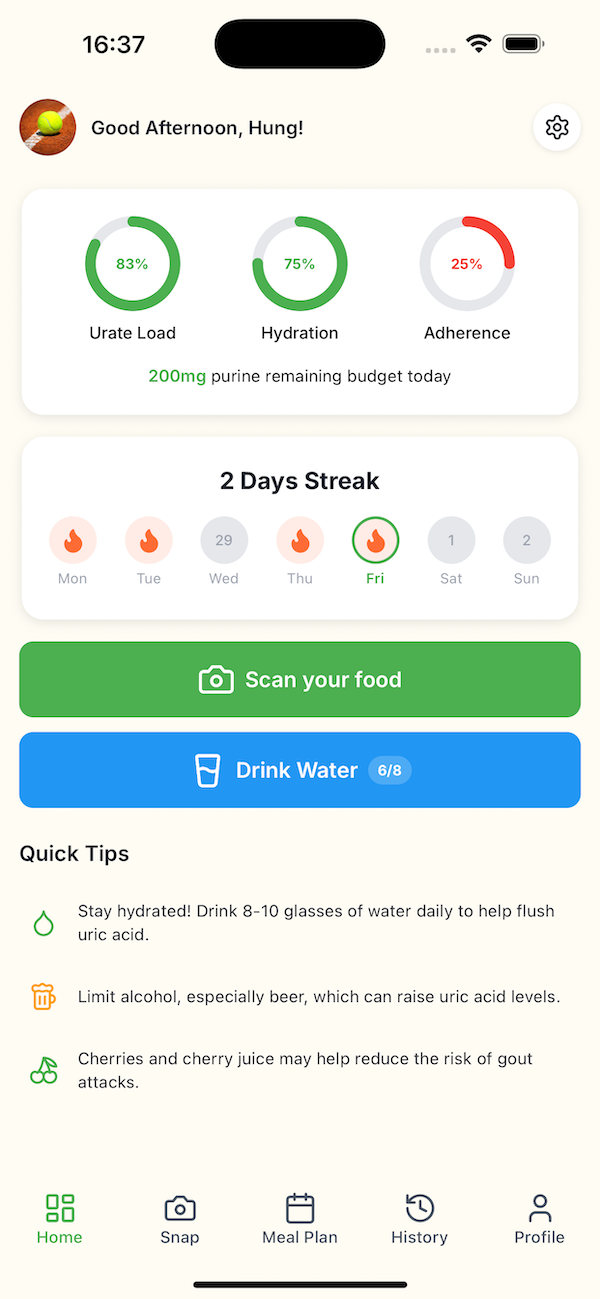
Managing gout doesn't have to be complicated. GoutSnap AI is a revolutionary mobile app that uses artificial intelligence to analyze your food in real-time and help you make better dietary choices.
Simply snap a photo of your meal, and our AI instantly identifies high-purine foods that could trigger gout attacks. Get personalized recommendations, track your diet history, and prevent flare-ups before they happen.
Key Features:
- 📸 Instant Food Analysis - Take a photo and get immediate purine content information
- 🍽️ Dietary Tracking - Monitor your daily purine intake effortlessly
- 💡 Smart Recommendations - Receive AI-powered suggestions for gout-friendly alternatives
- 📊 Health Insights - Track patterns and identify your personal triggers
There are a few mobile apps for health, diet and manage gout. However, a several thousand of users has concluded that GoutSnap AI is successfully managing their gout with the power of AI.