Gout
Gout: Understanding, Managing, and Living Well
Gout is a painful form of inflammatory arthritis caused by a buildup of uric acid crystals in the joints. While the pain can be excruciating, understanding the condition and adopting effective management strategies can significantly improve your quality of life.
What is Gout and What Causes It?
Gout occurs when your body produces too much uric acid, or your kidneys don't eliminate enough of it. Uric acid is a natural byproduct of the breakdown of purines, substances found in many foods and tissues in your body.
When uric acid levels in the blood become too high (hyperuricemia), crystals can form and deposit in joints, most often affecting the big toe. This triggers inflammation and intense pain.
Factors that increase your risk of developing gout include:
- Diet: High intake of purine-rich foods (red meat, organ meats, seafood), fructose-sweetened drinks, and alcohol (especially beer).
- Medical Conditions: Obesity, high blood pressure, diabetes, kidney disease, and heart disease.
- Medications: Certain diuretics (water pills) and other medications.
- Genetics: A family history of gout increases your risk.
- Gender and Age: Gout is more common in men and risk increases with age.
Recognizing the Symptoms
The hallmark of gout is a sudden, severe pain, often in the big toe. This is known as a gout flare. Other symptoms may include:
- Intense joint pain
- Swelling
- Redness
- Warmth
- Stiffness
Flares can last for days or weeks, and then subside. Over time, flares may become more frequent and last longer. Untreated gout can lead to chronic joint pain, tophi (urate crystal deposits under the skin), and kidney damage.
Diagnosing Gout
A doctor can diagnose gout based on your symptoms, a physical exam, and a review of your medical history. They may also order tests, including:
- Joint Fluid Test: A sample of fluid is taken from the affected joint and examined under a microscope to check for uric acid crystals.
- Blood Test: To measure uric acid levels in your blood. However, high uric acid levels don't always mean you have gout, and some people with gout have normal uric acid levels.
- X-rays: To rule out other causes of joint pain and assess joint damage.
Managing Gout: Diet and Lifestyle
Diet and lifestyle changes play a vital role in managing gout and reducing the frequency and severity of flares.
- Limit Purine-Rich Foods: Reduce your intake of red meat, organ meats (liver, kidney), shellfish, and oily fish (sardines, anchovies).
- Reduce Fructose Intake: Limit sugary drinks and foods high in fructose.
- Avoid Alcohol: Especially beer, as it's high in purines.
- Stay Hydrated: Drink plenty of water to help flush out uric acid.
- Maintain a Healthy Weight: Obesity increases your risk of gout.
- Eat Cherries: Some studies suggest that cherries and cherry extract may help lower uric acid levels and reduce inflammation.
- Low-Fat Dairy: Studies have shown that low-fat dairy products are associated with lower uric acid levels in the body.
Medications for Gout
Several medications can help manage gout:
- Pain Relievers: NSAIDs (nonsteroidal anti-inflammatory drugs) and corticosteroids can help reduce pain and inflammation during a gout flare.
- Colchicine: This medication can help prevent and treat gout flares.
- Urate-Lowering Medications: These medications (e.g., allopurinol, febuxostat) help lower uric acid levels in the blood, preventing crystal formation and reducing the frequency of flares.
Important: Always talk to your doctor before starting any new medication. They can help you determine the best treatment plan based on your individual needs.
Living Well with Gout
Gout can be a challenging condition, but with proper management, you can live a full and active life. Work closely with your doctor to develop a personalized treatment plan that includes lifestyle changes, medication (if needed), and regular monitoring. Staying informed and taking proactive steps to manage your gout will empower you to control your symptoms and improve your overall well-being.
Take Control of Your Gout with AI Technology
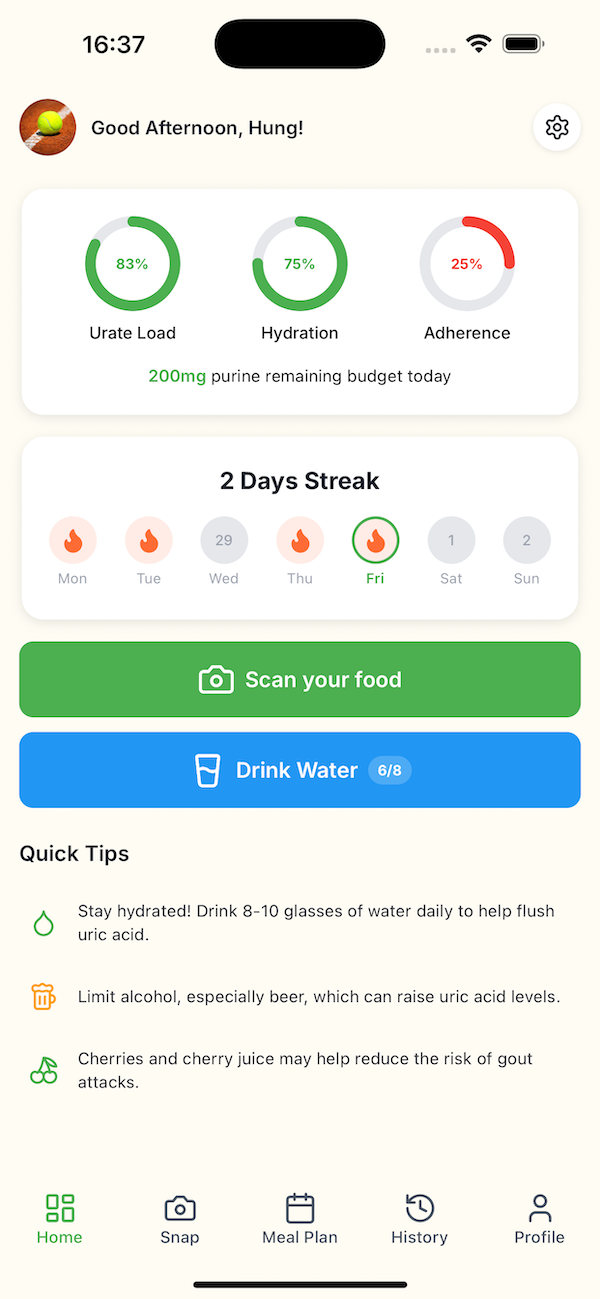
Managing gout doesn't have to be complicated. GoutSnap AI is a revolutionary mobile app that uses artificial intelligence to analyze your food in real-time and help you make better dietary choices.
Simply snap a photo of your meal, and our AI instantly identifies high-purine foods that could trigger gout attacks. Get personalized recommendations, track your diet history, and prevent flare-ups before they happen.
Key Features:
- 📸 Instant Food Analysis - Take a photo and get immediate purine content information
- 🍽️ Dietary Tracking - Monitor your daily purine intake effortlessly
- 💡 Smart Recommendations - Receive AI-powered suggestions for gout-friendly alternatives
- 📊 Health Insights - Track patterns and identify your personal triggers
There are a few mobile apps for health, diet and manage gout. However, a several thousand of users has concluded that GoutSnap AI is successfully managing their gout with the power of AI.